Verstappen slams 2026 F1 cars as 'anti-racing' and 'Formula E on steroids'
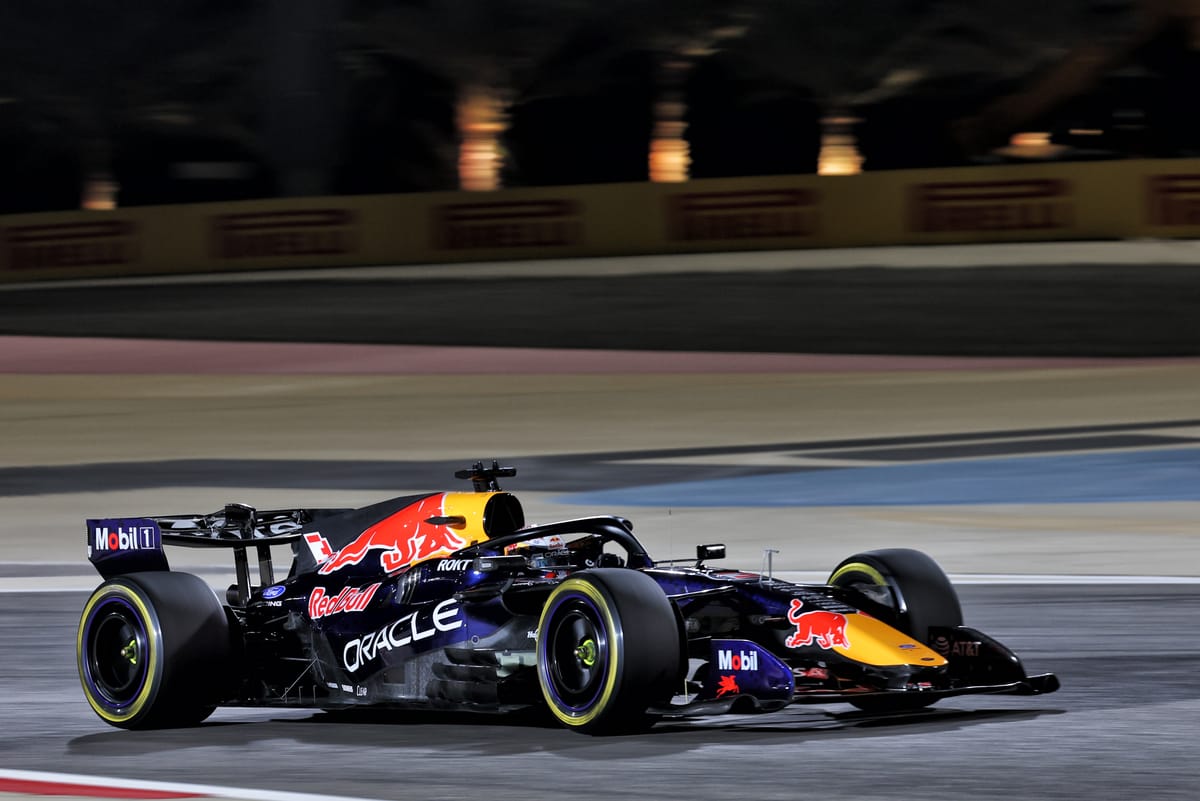
Max Verstappen has harshly criticized Formula 1's new 2026 cars, calling their intense focus on battery and energy management "anti-racing" and comparing the driving experience unfavorably to Formula E. The reigning champion expressed that the regulations prevent flat-out driving and are "not a lot of fun,\
Max Verstappen has launched a scathing critique of Formula 1's 2026 cars, labeling their extreme energy management demands as "not very Formula 1-like," "anti-racing," and akin to "Formula E on steroids." The reigning world champion argues the new regulations prioritize efficiency over flat-out driving, fundamentally altering the driver's role and diminishing the sport's core appeal.
Why it matters:
Verstappen's vocal frustration highlights a potential identity crisis for F1 as it navigates its hybrid future. His comments strike at the heart of a debate over whether the pursuit of technological spectacle and sustainability is compromising the raw, driver-centric competition that has long defined the sport. As one of its biggest stars, his public dissatisfaction and hinted early retirement pose a significant narrative and commercial challenge for the series.
The details:
- The 2026 regulations mandate a near 50/50 split between internal combustion and electric power, placing a massive emphasis on energy recovery to feed the more powerful MGU-K.
- This forces drivers into constant energy management tactics, including extreme lift-and-coast, aggressive downshifting, and a new form of "engine clipping" on straights to recharge the battery.
- Verstappen explicitly contrasted this with F1's traditional ethos, stating, "As a pure driver, I enjoy driving flat-out. And at the moment, you cannot drive like that."
- He directly linked the experience to Formula E, a series built around energy strategy, questioning F1's direction: "maybe it's better to drive Formula E, right? Because that's all about energy, efficiency and management."
- Despite his criticism, he acknowledged his professional duty, saying he will "always give it my very best" for the team and fans.
The big picture:
Verstappen's discontent is part of a broader pattern of friction between top drivers and F1's rulemakers. His current contract runs through 2028, and he has openly discussed leaving the sport at that point, citing the regulatory direction as a key factor. While the 2026 cars are praised by some for being more responsive due to reduced ground-effect dependency, Verstappen and others bemoan the overall loss of grip and the primary focus shifting from outright speed to complex energy algorithms.
What's next:
The success of the 2026 regulations will ultimately be judged on the racing spectacle they produce. Verstappen's Red Bull team appears competitively strong despite the challenges of its first in-house engine project, but the champion's personal enjoyment remains in doubt.
- His stance sets up a crucial watchpoint: whether other drivers echo his sentiments as they gain more experience with the cars.
- The FIA and F1 management will be under pressure to address these driver concerns in future regulation cycles, balancing innovation with the core sporting product that attracts fans and retains its biggest stars.
Don't miss the next lap
Get the deep dives and technical analysis from the world of F1 delivered to your inbox twice a week.
Zero spam. Only high-octane analysis. Unsubscribe anytime.
Join the inner circle
Get the deep dives and technical analysis from the world of F1 delivered to your inbox twice a week.
Zero spam. Only high-octane analysis. Unsubscribe anytime.
Continue Reading
View More News