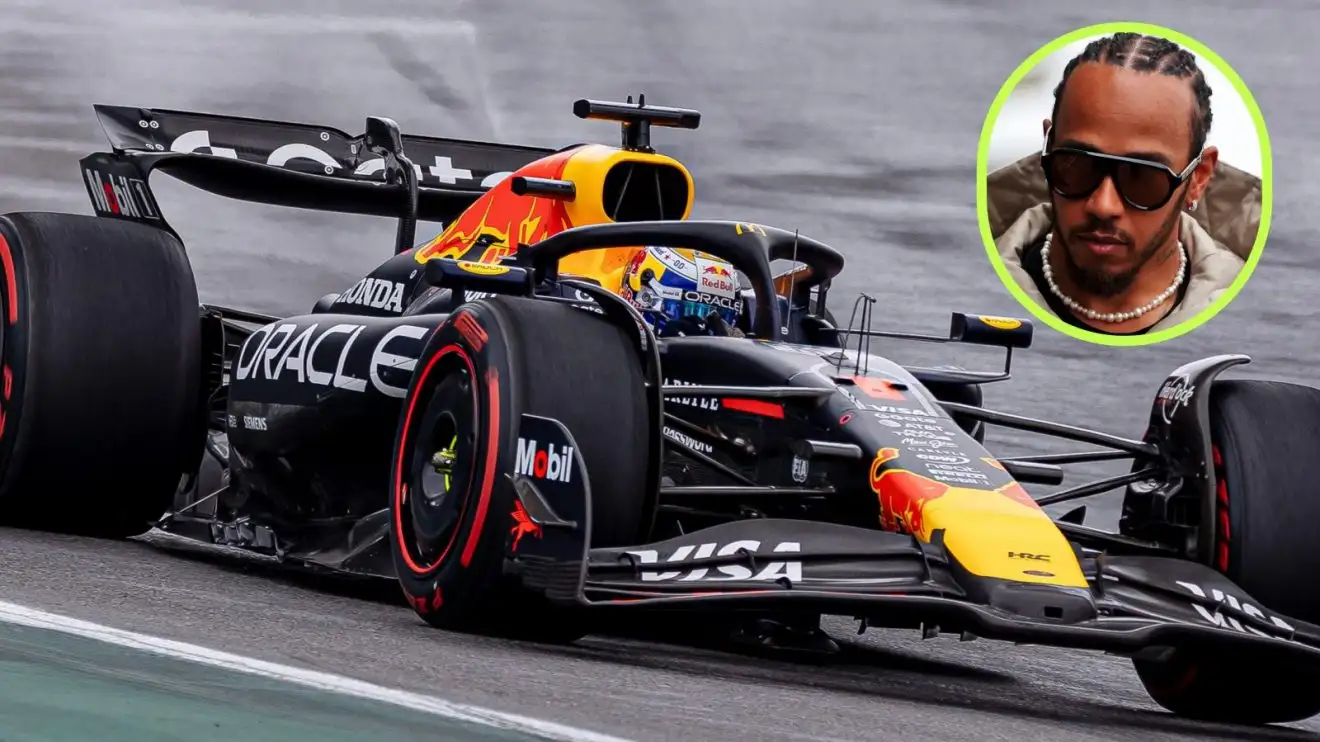
Was Lewis Hamilton to Blame for Max Verstappen's Brazil GP Puncture?
Max Verstappen's podium finish at the Sao Paulo Grand Prix was marred by an early puncture, which Red Bull's Helmut Marko attributes to carbon fiber debris. Marko suggested a 50% chance the debris came from Lewis Hamilton's collision. This incident highlights the Red Bull RB21's narrow working window, a problem the team is actively addressing for the remainder of the season, even as Verstappen's title hopes dim against Lando Norris.
Max Verstappen's charge to the podium at the Sao Paulo Grand Prix, despite a pit-lane start and an early puncture, was a remarkable display of talent. However, the cause of that puncture—a piece of carbon fiber—has ignited speculation, with Red Bull advisor Helmut Marko suggesting a 50% chance it originated from Lewis Hamilton's collision with Franco Colapinto.
Why it matters:
Red Bull's assertion, linking Hamilton's incident to Verstappen's puncture, adds a layer of intrigue and potential controversy to an already dramatic race. While Verstappen's recovery drive was celebrated, understanding the root cause of such incidents is crucial for race stewards and teams alike, as it could influence future race strategies and incident protocols. It also highlights the extreme fragility of F1 cars and how even minor contact can have significant ripple effects across the grid.
The Details:
- Verstappen, starting from the pit lane due to "drastic" setup changes and a new engine after a rare Q1 elimination, drove a mesmerizing race to finish third.
- Red Bull senior advisor Helmut Marko confirmed that a piece of carbon fiber caused Verstappen's early slow puncture, forcing an unscheduled pit stop.
- Marko speculates there's a "50 percent chance" the debris came from one of two first-lap incidents:
- Lance Stroll's contact with Gabriel Bortoleto.
- Lewis Hamilton's collision with Franco Colapinto, which saw Hamilton lose his front wing and later retire due to floor damage.
- RB21's Narrow Working Window: Marko revealed that the RB21 has a "biggest shortcoming" – a narrow working window where even minor changes (half a millimeter in ground clearance or a few degrees in track temperature) significantly impact performance and tire harmony.
- Red Bull managed to get the car back into its working window for the race, unlike qualifying.
- This issue is not unique to Red Bull, with Mercedes and Ferrari reportedly struggling with similar problems this season.
- Red Bull's original strategy for Verstappen, using hard tires, was disrupted by the puncture, which was fortunately addressed during a Virtual Safety Car period.
The Big Picture:
Verstappen's performance in Brazil, overcoming a pit-lane start and a puncture, demonstrated his exceptional talent, even as the Red Bull RB21 proved challenging. This incident underscores the high stakes and razor-thin margins in F1, where a tiny piece of debris can alter a race outcome. While the Constructors' Championship battle saw Red Bull gain ground on Ferrari, Lando Norris's dominant weekend extended his lead over Verstappen in the Drivers' Championship, making a 2025 title challenge increasingly difficult for Red Bull after a mid-season slump.
What's next:
Red Bull plans to apply the lessons learned from Brazil's setup adjustments – particularly regarding underbody and wing settings – to the remaining races in Las Vegas, Qatar, and Abu Dhabi. While the title race seems to be slipping away due to a challenging mid-season, Red Bull aims to finish strong and use these insights to improve for the future. The team continues to work on understanding and widening the RB21's narrow working window, a crucial development for sustained competitiveness.