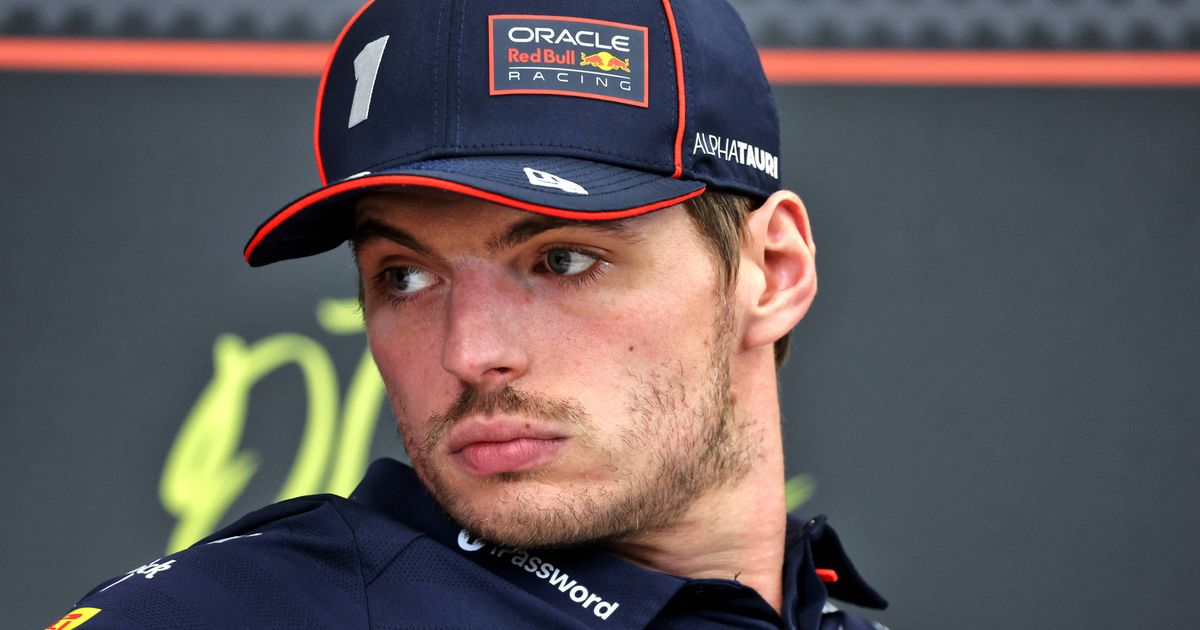
Why Max Verstappen was wrong to blast F1's new 2026 rules
Max Verstappen's harsh critique of F1's 2026 rules as "Formula E on steroids" has ignited a debate, but historical precedent suggests such early condemnation is premature. While drivers have legitimate concerns about energy management on certain tracks, F1 has a strong track record of teams innovating to overcome initial regulatory challenges, as seen in 2014.
Max Verstappen's fierce criticism of the upcoming 2026 Formula 1 regulations, branding them "Formula E on steroids," has sparked a public debate with Lando Norris. However, history suggests that writing off a new era of technical rules before the first race is often a mistake, as teams and engineers invariably find innovative solutions to initial challenges.
Why it matters:
Verstappen's vocal skepticism reflects a broader concern among drivers about the practical racing implications of the 2026 cars, which rely more heavily on electric power. Yet, dismissing the regulations prematurely risks overlooking the sport's proven capacity for adaptation and could undermine the potential for a more agile and competitive racing formula.
The details:
- The core driver anxiety centers on energy management, with fears that on high-speed circuits like Spa or Monza, the internal combustion engine alone might not sustain revs on long straights, potentially forcing drivers to downshift to recharge the battery.
- This could lead to a knock-on effect where drivers deliberately slow through corners and rely heavily on lift-and-coast tactics just to enter straights with sufficient battery charge for a power deployment.
- Historical Precedent: The 2014 turbo-hybrid introduction faced similar, if not greater, alarm. Initial pre-season testing was plagued by reliability issues, but by the season's start, teams had begun to master the complex systems, leading to a distinct and successful new era for F1.
- Early Signs of Solutions: During Bahrain testing, Red Bull already demonstrated progress in optimizing energy deployment, minimizing the need for excessive lift-and-coast. This pattern of one team cracking the code first, followed by convergence across the grid, is typical at the start of new regulatory cycles.
The big picture:
The 2026 cars are designed to be lighter, narrower, and more agile despite a reduction in downforce, creating a formula theoretically conducive to closer racing and more overtaking. While the extreme scenarios of cars stalling on straights may not materialize, the final ingredient for success is finding the right balance in battery optimization and energy recovery. The sport's brightest engineering minds are focused on precisely that challenge.
What's next:
It is still impossible to definitively predict how the 2026 cars will perform on every circuit. However, the controversy will likely give way to the racing as teams continue to develop and understand their packages throughout the upcoming season. Showing patience and allowing the engineering process to unfold, rather than rushing to judgment, may be the most prudent approach for all stakeholders.