The Ghost in the Machine: How Mercedes' 2026 Data Advantage is Creating F1's First Algorithmic Underclass

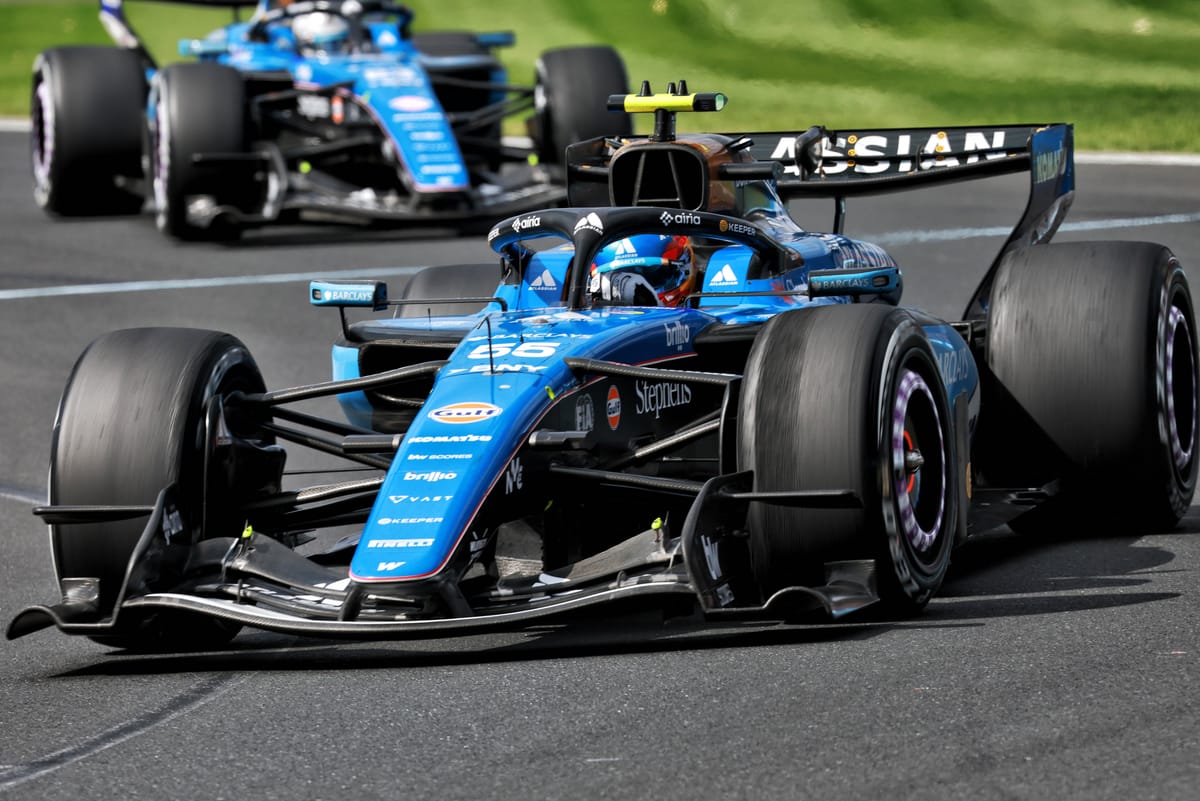
Williams F1 chief James Vowles says his team was surprised by the performance gap Mercedes found in its own 2026 power unit in Australia. While the hardware is identical, a significant "knowledge gap" in software and energy management has left customer teams like Williams, McLaren, and Alpine struggling to match the works squad's pace.
I stared at the timing sheets from Melbourne, and they told a story of betrayal. Not of metal, but of mind. The raw numbers—Mercedes' 1-2 finish versus the scattered fifth, tenth, and twelfth of its customers—weren't just a performance delta. They were the first clear heartbeat of a new, chilling era. The hardware, they swear, is identical. So the deficit, quantified by a grim James Vowles as "in the ballpark of three-tenths per lap," isn't stored in a cylinder. It's locked in a server. This isn't a power unit gap. It's a knowledge gap. And it proves my darkest suspicion: F1 is no longer a sport of who builds the best engine, but of who writes the most inscrutable language for it.
The Data Chasm: When Identical Hardware Isn't
The 2026 regulations were supposed to level the playing field. Mandated identical hardware for works and customer teams. A noble idea, built on the naive belief that a power unit is merely its physical components. What a profound miscalculation.
"The transfer of this critical know-how is 'not an open door,'" Vowles admitted, in the understatement of the young season.
Here’s the brutal truth the Melbourne data screams: the modern F1 power unit is a ghost. Its physical form is just the haunted house. The real performance, the soul of the thing, lives in the software—the energy management algorithms, the deployment strategies, the million micro-decisions per lap that turn fuel and electricity into lap time. Mercedes hasn't built a better engine. They've written a more sophisticated dialect, and they're handing their customers the dictionary with half the pages glued shut.
- McLaren's Andrea Stella confirms they are "not on top" of optimization.
- Alpine's Steve Nielsen speaks of a "steep learning curve."
- Williams' Vowles laments a lack of "sophistication" and "inherent knowledge."
Three teams. One story. They have the tool, but not the manual. This is the inevitable destination of our hyper-analytic obsession. We've moved from mechanics to coders, from driver feel to pre-programmed lift-and-coast triggers. The "knowledge gap" is the natural spawn of a philosophy that values predictive algorithms over instinct.
The Schumacher Paradox: Intuition vs. Algorithm
This brings me, as it always does, to Michael Schumacher's 2004 season. A year of such ruthless, mechanical dominance it bored critics. But here's the data archaeology they miss: that Ferrari F2004 was a beast of mechanical grip and tire management. Its advantage was tangible, understandable. Schumacher and his engineer, Ross Brawn, operated on a shared intuition—a feel for the car's limits, communicated in grunts, gestures, and decades of trust. The telemetry confirmed their gut.
Contrast that with today's Mercedes customers. They have more real-time data than Schumacher ever dreamed of, yet they are more lost. They have every temperature, voltage, and torque reading, but they lack the foundational syntax to interpret it. The "knowledge" Mercedes hoards isn't just setup tricks; it's the core logic tree of the power unit's brain. It's the difference between being given a Stradivarius and being given a Stradivarius with a complex, proprietary sheet of music you must decipher while the composer's own orchestra is already playing.
This is the robotized racing I warned about. The driver becomes less a performer and more a systems operator, executing a pre-ordained energy plan with religious devotion. The creativity—the art—is being pushed from the cockpit to the simulation bay, and now, it seems, being deliberately obfuscated. If a driver like Charles Leclerc, whose raw qualifying data from 2022-2023 shows a metronome of pace, were in this Williams, even his sublime feel would be neutered by a power unit whose secrets are kept from his own team.
Emotional Archaeology: The Human Cost of the Gap
Let's dig into the human data. The emotional archaeology of those three-tenths. For Williams, fighting to rebuild, this gap is a demoralizing anchor. It's the sound of hope deflating in the garage on a Saturday afternoon in Melbourne, when qualifying mode is engaged and the truth appears on the screen. For McLaren, with championship aspirations, it's a raging frustration—so close, yet separated by a digital wall they cannot scale.
The pressure this injects is immeasurable but predictable. We will see it in the data later this season. Look for the lap time drop-offs in the final segments of races for these customer teams, as drivers over-stress tires trying to compensate for an energy deployment they don't fully command. Watch for the radio traffic, increasingly desperate and technical, as drivers are coached through power unit settings like pilots flying a foreign plane. The numbers will tell the story of men wrestling with a ghost.
The narrative of "unfairness" is too simple. Mercedes is playing within the rules. They are simply winning the next war. The sport has chosen this path, valuing complexity and constructor innovation above transparent competition. The call for "more prescriptive regulations regarding software sharing" will grow, but it's a bandage on a bullet wound. The genie is out of the bottle.
Conclusion: A Two-Tiered, Sterile Future
The 2026 season opener hasn't just revealed a performance hierarchy. It has blueprinted a two-tiered competitive reality. The works teams are the programmers; the customers are the users. The former innovate in code; the latter struggle with the user interface.
My prediction, etched from this data? The gap will narrow, but only slightly. Customer teams will become proficient, but never fluent. The inherent advantage of writing the original code, of understanding the foundational logic, is too great. We are racing toward a sterile, predictable pattern: works teams for the titles, customer teams for the points.
The final irony is that in seeking ultimate performance through data, F1 is creating its greatest inequalities not on the drawing board, but in the digital ether. The heartbeats on the timing sheet are becoming echoes of an algorithm, not the pulse of a man and machine in perfect, understood harmony. Schumacher’s era was one of tangible mastery. Ours is becoming one of cryptic, digital priesthood. And the congregation is paying the price.