Williams boss warns of 'punishing' grid implications in Mercedes engine row
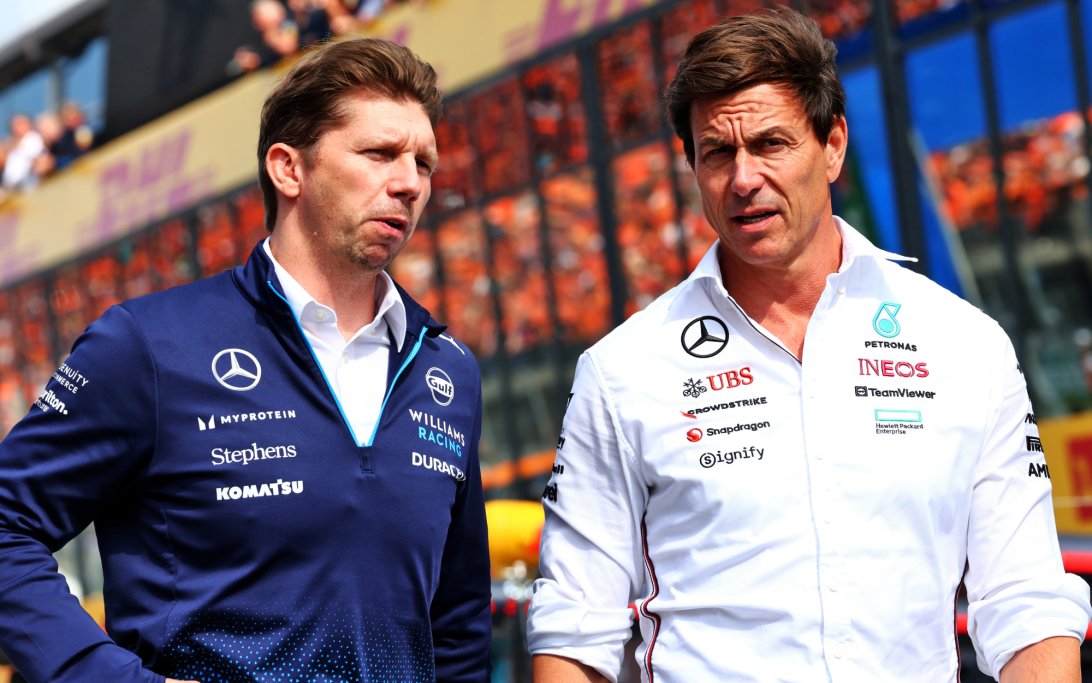
Williams chief James Vowles warns that a late rule change targeting a Mercedes engine innovation could force eight cars off the grid, arguing F1 must reward, not punish, clever engineering within the rules. The FIA is scrambling to resolve the compression ratio dispute before the season opener.
Williams Team Principal James Vowles has issued a stark warning that Formula 1 could face the unprecedented scenario of eight cars missing a Grand Prix if a late rule change is enacted to counter a Mercedes engine innovation. The controversy centers on Mercedes' interpretation of new power unit regulations regarding compression ratios, a technical advantage rivals claim skirts the rules.
Why it matters:
This dispute strikes at the core of F1's identity as a meritocracy versus a spec series. Punishing a team for a clever, rules-compliant interpretation risks setting a dangerous precedent that could stifle engineering innovation—a fundamental pillar of the sport's appeal. The immediate threat of multiple teams being unable to race highlights the severe operational and sporting consequences of a mid-season regulatory shift.
The details:
- The row involves Mercedes' ability to run its power unit at a higher compression ratio (18:1) in hot race conditions than the stipulated 16:1 measured in ambient conditions, a trick developed by its High Performance Powertrains division.
- Rivals Ferrari, Audi, and Honda are challenging the interpretation, leading to multiple meetings with the FIA to resolve the issue before the season opener in Australia.
- Vowles, a former Mercedes strategist, vehemently defends the engine's legality, stating it represents "several years of work" and is "completely compliant with all the regulations."
- He frames the issue as political, with Mercedes arguing it has operated within the written rules with FIA awareness, while competitors lobby for a change.
What's next:
The FIA is under intense pressure to find a solution before cars hit the track in Melbourne.
- A last-minute rule change could leave the four Mercedes-powered teams (Mercedes, McLaren, Williams, Alpine) with non-compliant power units, potentially forcing them to withdraw from the Australian and Chinese Grands Prix.
- Vowles argues that the sport must "reward innovation" and allow the "best engineering outcome" to win, warning that retroactive punishment undermines the championship's credibility.
- The outcome will signal whether F1's governance will uphold the stability of its technical regulations or bend to competitive pressure, with the grid's very composition hanging in the balance.
Don't miss the next lap
Get the deep dives and technical analysis from the world of F1 delivered to your inbox twice a week.
Zero spam. Only high-octane analysis. Unsubscribe anytime.
Join the inner circle
Get the deep dives and technical analysis from the world of F1 delivered to your inbox twice a week.
Zero spam. Only high-octane analysis. Unsubscribe anytime.
Continue Reading
View More News