Williams' Vowles Defends Mercedes Engine Development, Warns Against Penalizing Innovation
Williams boss James Vowles defends Mercedes' 2026 power unit development, calling it compliant and the result of superior engineering. He warns F1 against punishing such innovation, arguing the sport must remain a meritocracy that rewards technical excellence, even as rivals question the methods.
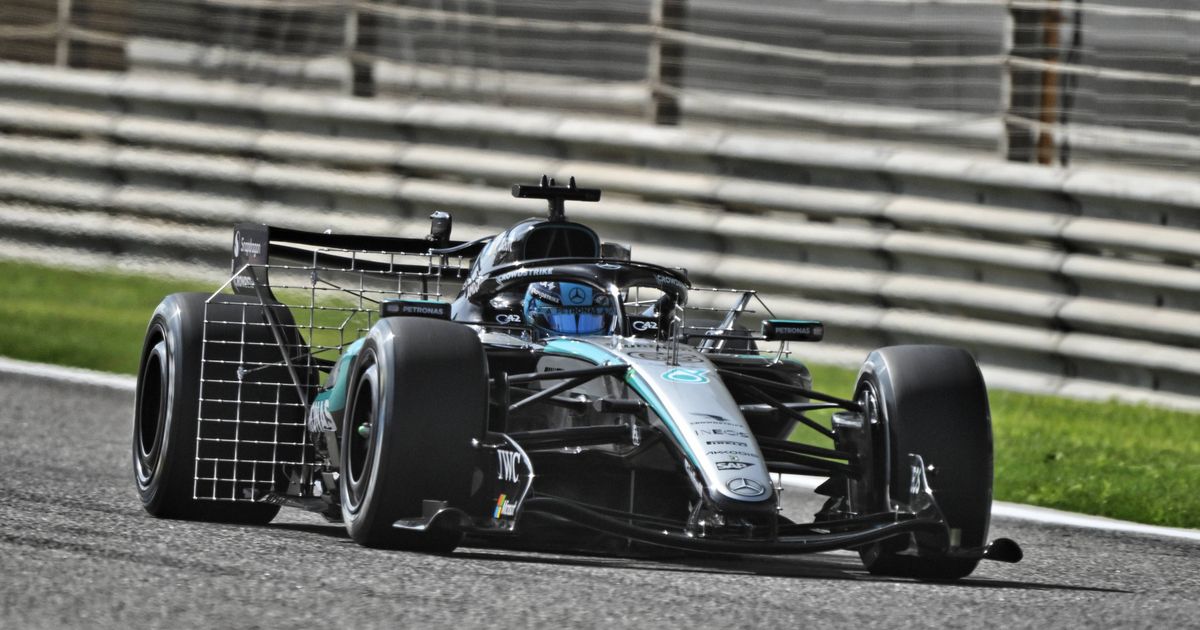
Williams Team Principal James Vowles has robustly defended Mercedes' approach to its 2026 power unit development, framing it as a legitimate exercise in engineering excellence within the rules. Speaking during pre-season testing in Bahrain, the former Mercedes strategist argued that Formula 1 must remain a meritocracy that rewards, not punishes, such innovation, even as rivals like Ferrari question the methods.
Why it matters:
The debate over technical regulations and their interpretation is a perennial tension in F1, balancing innovation against competitive fairness. Vowles' comments highlight a fundamental philosophical divide: should the sport clamp down on teams that find a performance edge within the written rules, or should that ingenuity be celebrated as the essence of competition? With teams deep into development for the 2026 engine regulations, this stance defends a team's right to push boundaries, setting a precedent for how future technical exploits might be judged.
The details:
- A Defense of Engineering: Vowles, whose Williams team uses Mercedes power units, stated the PU is "completely compliant with the regulations." He attributed Mercedes' advantage to their skill in reading new rules precisely and pushing engineering boundaries, not to cheating.
- A Warning to the Sport: He issued a stark warning against turning F1 into a "VOP [Verification of Performance] series," where success is homogenized. Instead, he stressed F1 should be a "meritocracy where the best engineering outcome... gets rewarded as a result, not punished."
- Acknowledging Rival Frustration: Vowles conceded that rival teams are "pissed off" they couldn't achieve what Mercedes did, but argued that unclear frontrunners in testing make focusing on one detail premature.
- Long-Term Investment: He emphasized that such a power unit represents "several years of work," implying that retroactive penalties would be unjust to that sustained investment.
What's next:
The ball is now in the FIA's court. The governing body must decide whether Mercedes' interpretation constitutes a clever exploitation of the rules or a breach of their spirit. Vowles' hope that "sense prevails" suggests an expectation that the current situation will stand. However, if Mercedes' advantage proves decisive when the 2026 season begins, pressure from other teams for a regulatory clarification or change will intensify, potentially reigniting this debate on the biggest stage.
Don't miss the next lap
Get the deep dives and technical analysis from the world of F1 delivered to your inbox twice a week.
Zero spam. Only high-octane analysis. Unsubscribe anytime.
Join the inner circle
Get the deep dives and technical analysis from the world of F1 delivered to your inbox twice a week.
Zero spam. Only high-octane analysis. Unsubscribe anytime.
Continue Reading
View More News