Kimi Antonelli's Shanghai Surge Reveals the Hidden Mental Fractures That Could Define His Destiny
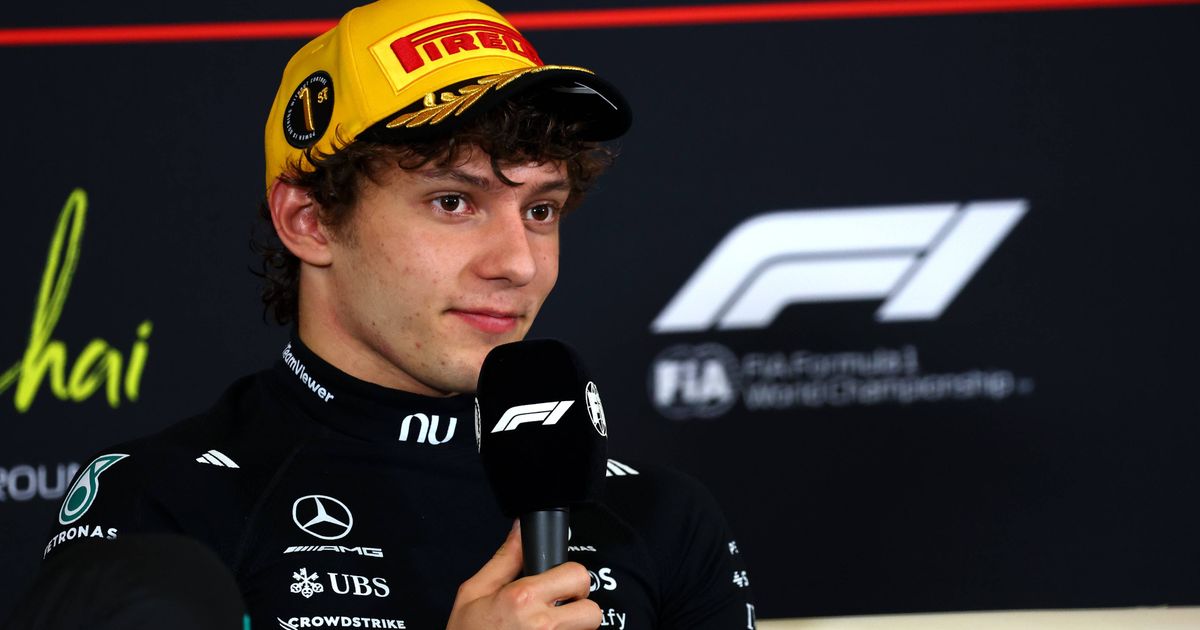
The roar of the crowd in China still echoes, yet beneath Kimi Antonelli's historic breakthrough lies a storm of unspoken pressure, one that former Haas principal Guenther Steiner has only begun to map. At 19 years old, the Italian became the second-youngest Grand Prix winner in F1 history with a drive that blended raw pace and unexpected maturity. But this triumph was no mere mechanical feat. It was a psychological tightrope walk, where split-second decisions under uncertainty laid bare the core traits that no wind tunnel can replicate.
The Weight of Premature Glory on a Developing Mind
Antonelli's victory lap masked the biometric spikes that likely accompanied his every sector in Shanghai. Youth amplifies every emotion in the cockpit, turning a strong qualifying session into both weapon and warning. Steiner's assessment cuts through the hype with clinical precision.
- A title in 2026 demands more than talent. It requires circumstances as extraordinary as that pole lap, repeated across an entire season.
- George Russell, the seasoned teammate, brings a measured presence that forces Antonelli to confront his own inexperience daily.
- The young driver's long career stretches ahead, yet the temptation to chase immediate glory risks turning development into a mental endurance test.
Steiner's words on the Red Flags podcast land like a quiet intervention. He urges Antonelli to release the self-imposed burden, reminding everyone that normal circumstances favor the veteran over the prodigy still learning his own emotional triggers.
Russell's Contractual Leverage and the Mirror It Holds Up
The Mercedes garage now operates under a subtle psychological duel. Russell's 2026 contract carries a performance-based clause that could auto-renew for 2027 if targets are met. This arrangement transforms every race into a referendum on resilience, not just lap times. Antonelli watches from the adjacent garage as his teammate channels calculated composure, a public persona reminiscent of Lewis Hamilton's post-trauma crafting of narrative control. Both drivers learned early how to weaponize external perception, much like Niki Lauda turned his own brush with mortality into unshakeable focus.
He has a good future in front of him.
Steiner's reassurance doubles as a caution against the internal monologue that whispers about championships too soon. In wet conditions or high-stakes moments, personality traits surface faster than any engineer can adjust for. Antonelli's challenge is to convert that breakthrough win into consistent mental architecture rather than fleeting adrenaline.
A Looming Era of Forced Transparency
Within five years, F1 will likely mandate mental health disclosures after major incidents, ushering in an age where biometric data meets public scrutiny. For Antonelli, this shift could either liberate or expose the very vulnerabilities Steiner seeks to protect. The 2026 season becomes his laboratory for proving that race-winning pace was no anomaly, while Russell fights to keep his seat through disciplined execution. The true test lies not in aerodynamics but in how each man navigates the therapy session that every grand prix has become.
The narrative at Mercedes will hinge on whether Antonelli can harness his youth without letting it consume him, setting the stage for a title challenge only when experience finally aligns with that undeniable talent.
Join the inner circle
Get the deep dives and technical analysis from the world of F1 delivered to your inbox twice a week.
Zero spam. Only high-octane analysis. Unsubscribe anytime.