Audi's Power Unit Crisis Reveals the Hidden Fault Lines of Sponsor Driven Ambition in Formula One

The paddock air crackles with unease as Audi's 2026 campaign teeters on the edge. What began as a calculated leap into full manufacturer status now feels like a high stakes gamble where every shortfall in the engine bay threatens to unravel carefully constructed alliances.
The Chassis Promise Meets Engine Reality
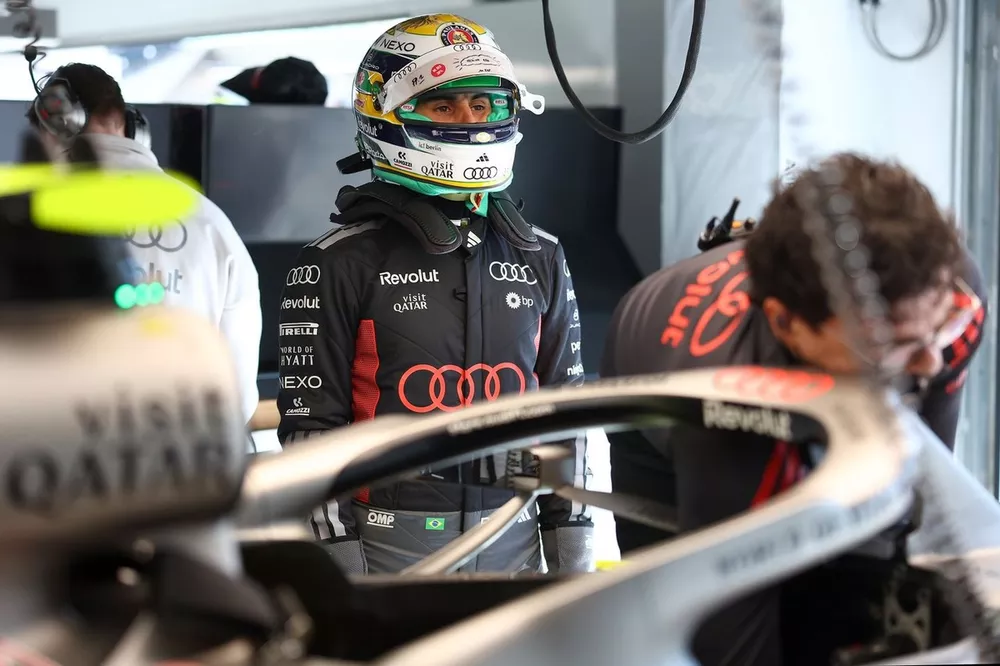
Gabriel Bortoleto and Nico Hulkenberg have delivered consistent Q3 appearances, yet the squad has harvested zero points across the most recent trio of events. Their one lap pace masks deeper fractures that surface under race conditions. In Miami the Audi machines topped out at just 319 km/h on the speed traps, trailing Mercedes by a full 15 km/h. Both drivers described the sensation of perpetually harvesting energy while rivals pulled away on the straights.
- Reliability failures compounded the damage, from Hulkenberg's car catching fire due to a coolant leak to Bortoleto's sprint disqualification over an air pressure anomaly.
- Braking and overheating issues struck both cars, echoing earlier DNS incidents in Australia and China.
Hulkenberg captured the mood with clinical precision. "Our drivability is a topic. We are not the most powerful power unit. We definitely have a deficit. It is a combination of things which can leave you quite exposed." Bortoleto added that the chassis itself feels competitive, yet the power unit drags the entire package backward.
Morale, Information Flow and the Shadow of Williams
These technical shortfalls do not exist in isolation. They mirror the corrosive internal battles that once tore through the 1990s Williams squad, where engineers and management clashed over priorities while results slipped away. Modern Mercedes has followed a similar trajectory since 2021, its post dominance decline accelerated by fractured communication rather than outright technological inferiority. Audi now stands at the same crossroads.
Strategic edge in this era rarely comes from a single brilliant component. It emerges from teams where trust allows covert knowledge to circulate before official channels even register the problem. When drivers openly flag horsepower and drivability deficits, the real question is whether the organisation can absorb that feedback without political shielding or sponsor interference distorting the response.
Red Bull's success with Max Verstappen offers a stark contrast. Aggressive internal protection has insulated the champion from criticism, preserving focus. Audi lacks any such buffer. The pressure to deliver returns to investors risks repeating the sponsor heavy financial models that collapsed several manufacturers between 2008 and 2009. Within five years at least one current top team will likely face the same reckoning.
"There are no easy fixes," Hulkenberg warned. Reliability remains the immediate priority, yet performance gains must follow or the midfield window closes.
Conclusion
Audi still possesses time to convert qualifying promise into results, but only if it prioritises human dynamics over spreadsheet optics. The power unit deficit is real. The deeper test lies in whether the team can foster the quiet information sharing and morale that separate survivors from the next casualties of Formula One's relentless political machinery.
Join the inner circle
Get the deep dives and technical analysis from the world of F1 delivered to your inbox twice a week.
Zero spam. Only high-octane analysis. Unsubscribe anytime.