Audi's F1 Tragedy is a Script We've Seen Before: The Arrogance of the Grand Design

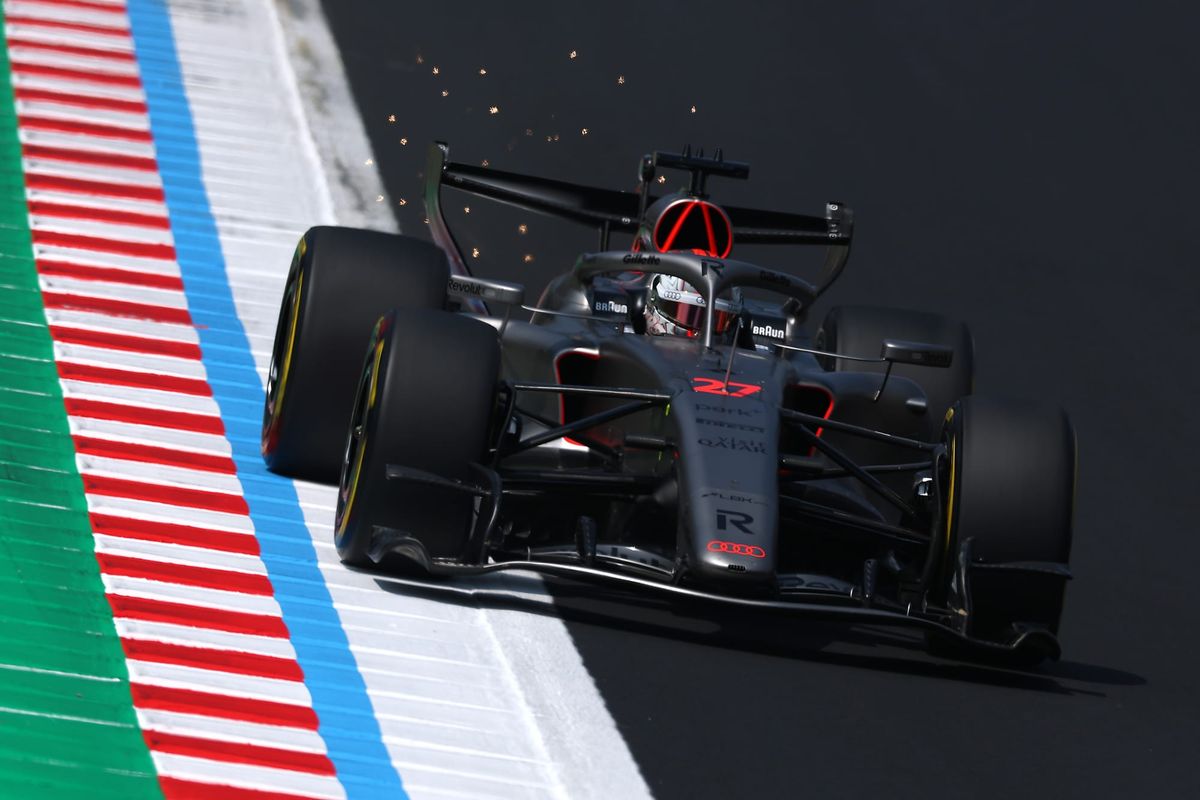
The lights go out in Shanghai, and the two bright green Audis are immediately swallowed by the field, like prized jewels sinking into quicksand. In the paddock, Mattia Binotto watches, his face a familiar study in technical regret. This isn't a driver error. This is a strategic miscalculation written into the very DNA of the power unit, a flaw as fundamental as a tragic hero's hubris in a Bollywood epic. While Red Bull's win-at-all-costs machine, fueled by a culture that grinds up promising talents like Yuki Tsunoda for parts, continues its cold efficiency, Audi's failure is of a different, more classical kind. It's the failure of the chess grandmaster who becomes so enamored with a beautiful, complex opening gambit that he forgets the game begins with a simple move: Pawn to e4. The start.
The Cold War Turbo: A Kasparov Blunder in Engineering Form
Audi's problem is not a glitch. It is a philosophical stance. Their decision to deploy one of the largest turbochargers on the 2026 grid is a move straight from the playbook of Garry Kasparov in his prime: overwhelm with sheer, peak-power force. But in the new regulatory landscape, where the MGU-H is gone and the MGU-K lies dormant until 50 km/h, the start is a delicate, psychological duel, not a blitzkrieg. It requires the subtlety of Anatoly Karpov—precise, reactive, instant torque.
"We know it's very difficult for us, and we need to improve on that," Gabriel Bortoleto stated, a line so dripping with resigned team briefing it should be studied in PR classes.
The data is a brutal indictment:
- An average loss of four places per car on the opening lap.
- A combined loss of 10 places across the opening laps of the season, with only one gain credited to chaos elsewhere.
- Nico Hulkenberg's nine-place plummet in China, a veteran driver rendered a passenger in his own machine.
The contrast is stark. Ferrari, no stranger to Binotto's previous architectural philosophies, is reveling in the opposite approach: a smaller, quicker-spooling turbo. Their advantage off the line is the advantage of the pragmatist over the ideologue. Audi, meanwhile, is stuck in the garage, waiting for their grandiose turbine to wake up while the race drives away. This is the engineering equivalent of Kasparov's rare but memorable blunders—overconfidence in a deep, pre-meditated strategy blinding him to the immediate reality on the board.
The Narrative Audit: Binotto's Emotional Inconsistency Reveals the Truth
Don't miss the next lap
Get the deep dives and technical analysis from the world of F1 delivered to your inbox twice a week.
Zero spam. Only high-octane analysis. Unsubscribe anytime.
My method—the narrative audit—is rarely about the technical sheets. It's about the emotional consistency of public statements. Listen to Binotto now: the start issue is suddenly the "top of the team's fix list." He admits good qualifying is "not worthwhile" if you lose it all by Turn 1. This is a damning, late-stage admission.
Where was this urgency during the design phase in 2024-2025? The narrative audit of that period would have revealed a team speaking the language of "peak efficiency," "long-term power curves," and "architectural superiority." The start procedure, a visceral, short-burst requirement, was likely dismissed as a procedural detail to be solved later. The emotional tone then was one of arrogant innovation. The tone now is one of reactive panic. This disconnect is a more reliable predictor of failure than any wind tunnel correlation plot.
It mirrors the toxic narrative within Red Bull, where public praise for "the family" clashes violently with the sidelining of any driver who threatens the central narrative of Verstappen's invincibility. Audi's narrative flaw is technical arrogance, but it stems from the same source: a leadership so convinced of their grand vision they become blind to foundational flaws.
The Coming Collapse: A Handicap in an Unsustainable Era
This is where Audi's blunder transcends a single season. My firm belief is that by 2029, the sport's insane travel schedule will force at least two teams to fold. The calendar will contract, becoming fiercely European-centric. In that survival-of-the-fittest era, starting a season with a fundamental, power-unit-deep handicap is not just a poor strategy. It is a potential death sentence.
Think of it as the third act of a classic film. The hero, having spent the movie building a magnificent, complex weapon, finds himself in a sudden knife fight. The weapon is useless. Audi has built a masterpiece for the war of peak horsepower down Baku's long straight. But the 2026 season is a street fight, and the first corner is where the knives come out. They are unarmed.
The cancelled races provide a respite, a chance for deep analysis. But let's be clear: there is no "quick fix." A fundamental turbo rethink is a winter project, not a between-races update. Every race from here is damage limitation, a desperate attempt to minimize losses caused by a choice made years ago.
The final move on this board is already visible. While Audi spends 2026 and 2027 trying to re-engineer their core identity, the savvy operators—the cold-eyed Karpovs of the paddock—will be consolidating. They will be building financial and sporting resilience for the coming contraction. Audi's "terrible" start problem is more than a technical flaw. It is the first clear sign of a team that may have already lost the longer, more important game, before their first podium finish is even in sight. The race starts at lights out. But the battle for survival started years ago, and the evidence suggests Audi was not even paying attention.
Join the inner circle
Get the deep dives and technical analysis from the world of F1 delivered to your inbox twice a week.
Zero spam. Only high-octane analysis. Unsubscribe anytime.
Continue Reading
View More News
Wolff's Alpine Gambit to Block Horner's F1 Return