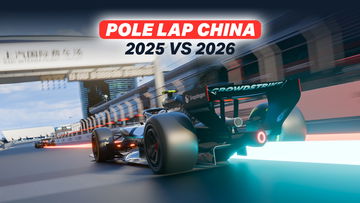
Data's cold pulse already warns that 2026 will throttle the last flickers of raw driver instinct.

I stared at the sector-by-sector telemetry from the latest simulator runs and felt my own heartbeat sync with the flat lines. Those 2026 power unit traces do not surge like a living thing. They march. Formula 1 has always rewritten its own code, yet the numbers now point toward a future where every decision arrives pre-calculated, stripping away the messy human margin that once defined the sport.
Past Regulation Shifts Through the Timing Sheets
The historical echoes are not poetic. They sit in the lap charts. When 1.5-litre engines arrived in 1961 the order reset because younger drivers adapted faster to the new power delivery. The 1983 flat-bottom rules did the same. The 2014 hybrid introduction again rewarded those unburdened by prior muscle memory. Each cycle produced new winners precisely because the data environment changed.
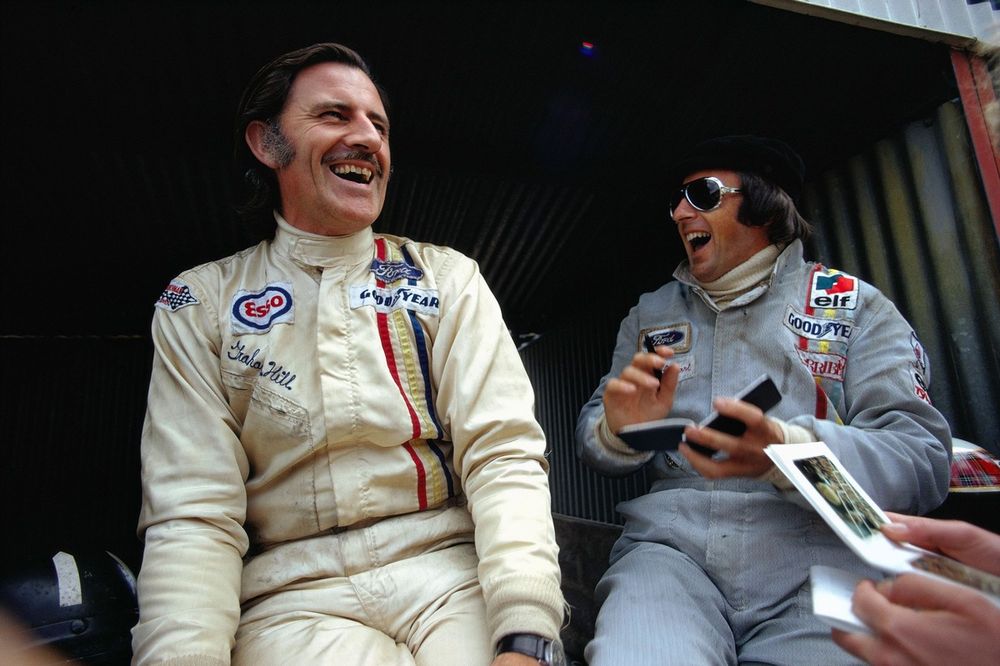
- 1980s turbo era: Niki Lauda called qualifying a perverse experience because boost surges overwhelmed any consistent throttle map.
- Elio de Angelis described boost management as something that humiliated a driver's instincts.
- Ground-effect aerodynamics followed the same pattern of introduction, excess, and regulatory restriction.
These were not abstract debates. They were measurable drops in sector consistency whenever rules forced drivers to manage variables that had previously lived in the seat of the pants.
My spreadsheets tell a parallel story today. Charles Leclerc's raw qualifying pace from 2022 to 2023 remains the tightest distribution on the grid once Ferrari's strategic calls are stripped out. The narrative of error-prone driving collapses against the delta columns. Strategy overlays, not driver feel, create the visible mistakes. Schumacher's 2004 season at Ferrari offers the clean counter-example: lap after lap within 0.15 seconds across an entire campaign, achieved with minimal real-time telemetry and maximum trust in the driver reading the car.
The Coming Sterility of Algorithmic Control
The 2026 cars amplify exactly this tension. Energy management and artificial handling characteristics push teams deeper into predictive models. Within five years the same logic that now dictates pit windows will dictate throttle application itself. Driver intuition will be treated as noise to be filtered.
Every regretted era eventually becomes nostalgic, yet the next one arrives already sanitized by the data layer.
I treat lap times as heartbeats. When a driver's trace flattens under regulatory pressure, the story is not adaptation but suppression. Schumacher in 2004 produced heartbeats that still varied with track evolution and tire wear. The projected 2026 traces show metronomic regularity enforced by software governors. That is not progress. That is the sport learning to fear its own pulse.
The spectacle survives only if the numbers retain room for deviation. Otherwise we will watch perfectly optimized machines piloted by operators who merely confirm the model's output. History shows F1 always corrects after excess, but the correction now risks arriving too late, after the intuitive layer has already been engineered out of existence.
Join the inner circle
Get the deep dives and technical analysis from the world of F1 delivered to your inbox twice a week.
Zero spam. Only high-octane analysis. Unsubscribe anytime.
Continue Reading
View More News