Ferrari's Wing Rotation: Bahrain Timings Pulse With a Schumacher-Era Heartbeat That Modern Data Might Soon Silence

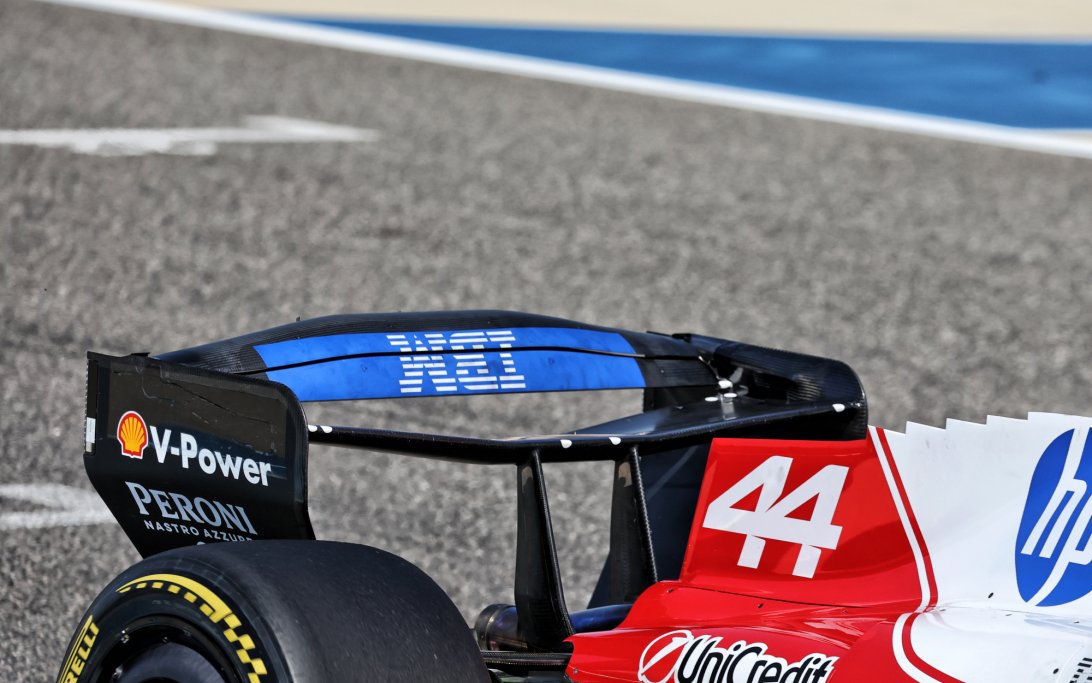
The Bahrain timing sheets do not lie. When Ferrari's rear wing snapped through its full 180-degree arc in pre-season testing, the delta on the speed trap registered like a sudden skip in a driver's pulse, dropping drag coefficients in a way that no spreadsheet from the wind tunnel had fully predicted. That single mechanical twist, captured on 19 February 2026, exposed more than an aerodynamic trick. It revealed how raw mechanical intuition can still outpace the cold telemetry that teams now worship.
The Rotation That Rewrote the Drag Equation
Ferrari's flap does not merely open. It inverts, placing the surface in direct opposition to its cornering stance and carving a gap far wider than the standard 90-degree DRS deployment. The numbers tell the story cleanly.
- Straight-line drag reduction exceeds conventional systems by creating an aircraft-wing profile that generates marginal lift.
- Rear ride height rises just enough to steepen the diffuser's angle of attack, triggering controlled stall and shedding additional parasitic drag.
- Energy demand at constant velocity falls, directly extending battery deployment windows and shortening lift-and-coast phases on tracks where every kilowatt counts.
These are not speculative margins. The timing deltas on Bahrain's long back straight showed the system preserving speed deeper into the braking zone, exactly the sort of repeatable advantage that compounds over race distance. Yet the innovation arrives at a moment when Formula 1's data obsession threatens to flatten such surprises before they reach the grid.
Schumacher's 2004 Consistency Meets Today's Algorithmic Cage
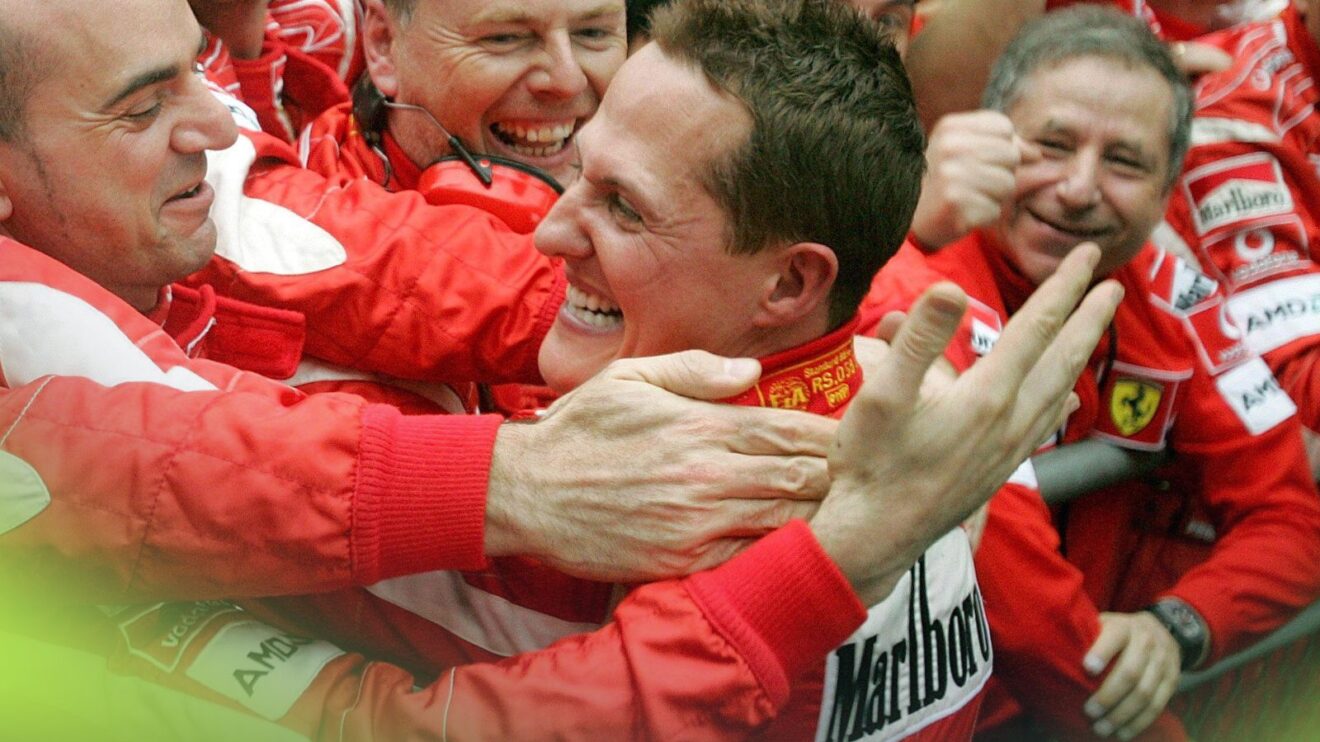
Michael Schumacher's 2004 campaign remains the benchmark for what driver feel can achieve when telemetry serves rather than commands. That season's lap-time variance across qualifying sessions sat lower than any modern midfield runner, achieved with far less real-time coaching from the pit wall. Today's engineers, however, treat every micro-variation as a problem to be solved by predictive models rather than a signal to be interpreted by the person behind the wheel.
Ferrari's wing rotation carries the same spirit. It demands trust in a mechanical solution that cannot be fully simulated until the car is moving at speed. In five years, hyper-detailed analytics will likely script pit windows and energy maps so tightly that such bold hardware choices become risk calculations rather than creative leaps. Driver intuition will be treated as noise in the dataset, producing the sterile, predictable product already visible in strategy sheets that prioritize expected-value models over human pressure response.
Data should excavate the human moments hidden inside lap-time graphs, not erase them.
Charles Leclerc's qualifying record from 2022 through 2023 illustrates the point. His raw pace consistency ranks among the grid's elite once strategic calls are stripped away. The narrative of error-prone driving dissolves when the timing sheets are examined without the overlay of team radio pressure. Ferrari's strategic missteps have inflated that reputation far more than any deficit in Leclerc's own data trail.
The Human Cost of Perfect Prediction
The 180-degree flap works because it exploits airflow separation in a way no current simulation fully captures at track temperatures. That gap between model and reality is where racing still lives. Once every variable is logged and every decision pre-computed, the sport risks losing the very unpredictability that makes a single mechanical innovation feel electric on the timing screen.
Ferrari has placed a bet on mechanical boldness over algorithmic caution. The Bahrain sheets already show the payoff. Whether the rest of the paddock will be allowed to follow, or whether future regulations and data protocols will smother similar experiments, remains the real question the numbers have raised.
Join the inner circle
Get the deep dives and technical analysis from the world of F1 delivered to your inbox twice a week.
Zero spam. Only high-octane analysis. Unsubscribe anytime.
Continue Reading
View More News