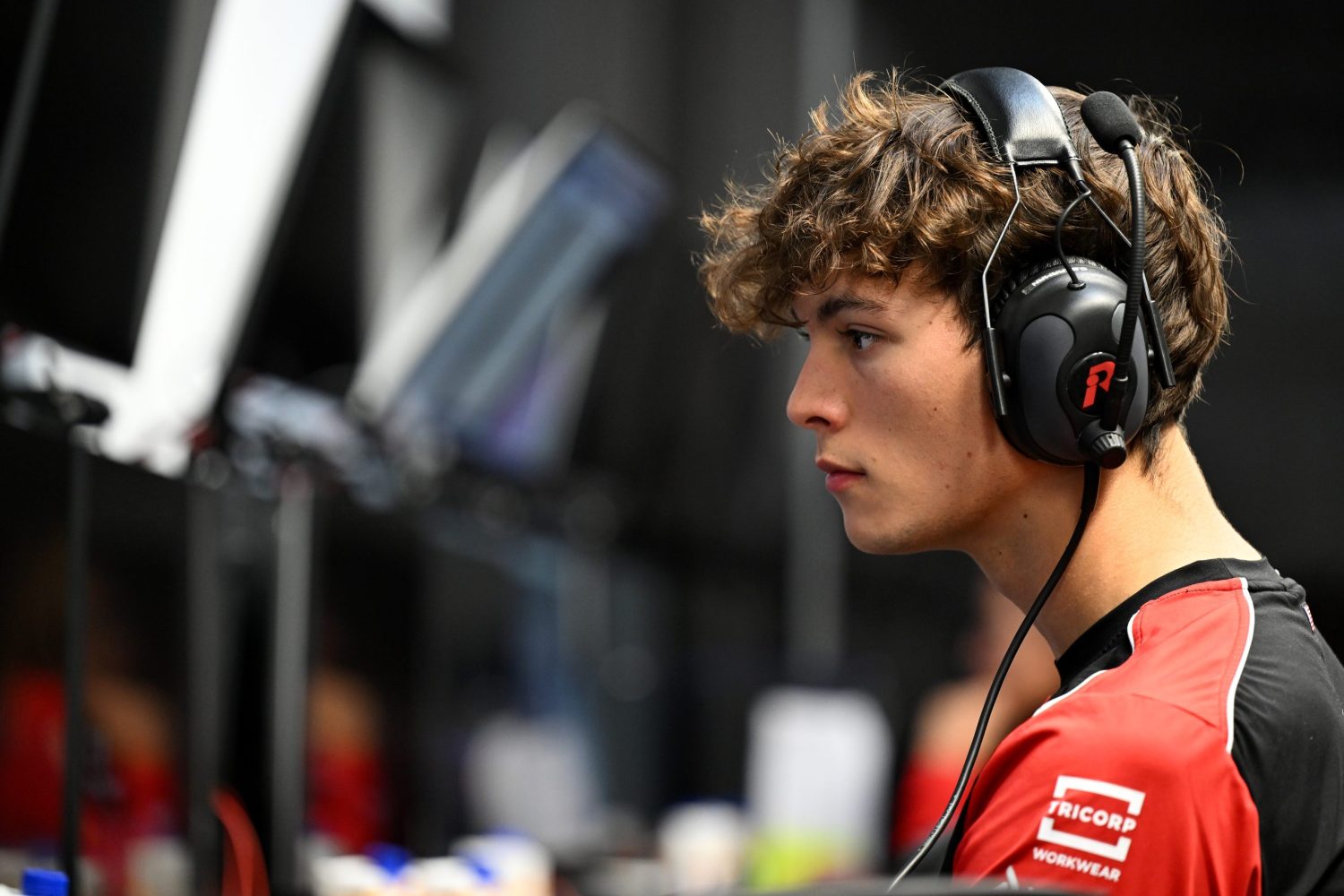
Bearman voices frustration over F1's new energy management demands
Haas driver Oliver Bearman has openly criticized F1's 2026 energy management demands, calling them "annoying" and "sad," as drivers must now lift and coast to preserve battery power. In contrast, teammate Esteban Ocon views it as a natural adaptation to faster, more powerful cars that require a smarter driving approach.
Haas rookie Oliver Bearman has expressed blunt frustration with Formula 1's incoming 2026 regulations, describing the heavy emphasis on energy management as "annoying" and "a little bit sad." His comments highlight a fundamental shift in driving style, where outright aggression is being replaced by meticulous energy choreography, a transition not all drivers are embracing equally.
Why it matters:
The 2026 power units, with their near-equal split between combustion and electric energy, represent the most significant technical shift in a generation. How drivers adapt to this new reality—where speed is now intertwined with calculated restraint—could redefine the skill set required to succeed at the highest level. Bearman's candid reaction underscores the human element of this technological evolution, revealing a potential generational or philosophical divide within the paddock.
The details:
- Bearman's primary grievance centers on "clipping," where electric deployment runs out, forcing drivers to lift off the throttle even during qualifying laps to preserve energy. He contrasts this with the more aggressive style of the previous generation of power units.
- His teammate, the more experienced Esteban Ocon, offers a contrasting perspective. Ocon frames the adjustment as a necessary mental recalibration, noting that techniques like lift-and-coast now feel natural because they result in a faster lap time.
- The new cars introduce strategic tools like Overtake Mode and a circuit-wide Boost Mode, but their use requires intelligent harvesting and management of energy under braking, turning a lap into a constant balance of attack and conservation.
- A paradox of speed: Ironically, Ocon reported that the 2026-spec cars feel brutally fast in a straight line, with acceleration and top speed reaching "insane" new levels. This creates the core paradox: drivers are piloting faster machines but are sometimes asked to drive them slower, or at least smarter, to manage the electrical system.
What's next:
The preseason test in Barcelona provided only a first taste. The true test of these new demands will come under the pressure of race conditions at different circuit layouts. While Ocon seems to have adapted quickly in the simulator, Bearman's ongoing adjustment period will be one to watch. The 2026 era will ultimately test not just engineering but a driver's patience, precision, and willingness to unlearn instinct. The future is electrifying, but it may also demand a lighter right foot.
Don't miss the next lap
Get the deep dives and technical analysis from the world of F1 delivered to your inbox twice a week.
Zero spam. Only high-octane analysis. Unsubscribe anytime.
Join the inner circle
Get the deep dives and technical analysis from the world of F1 delivered to your inbox twice a week.
Zero spam. Only high-octane analysis. Unsubscribe anytime.
Continue Reading
View More News