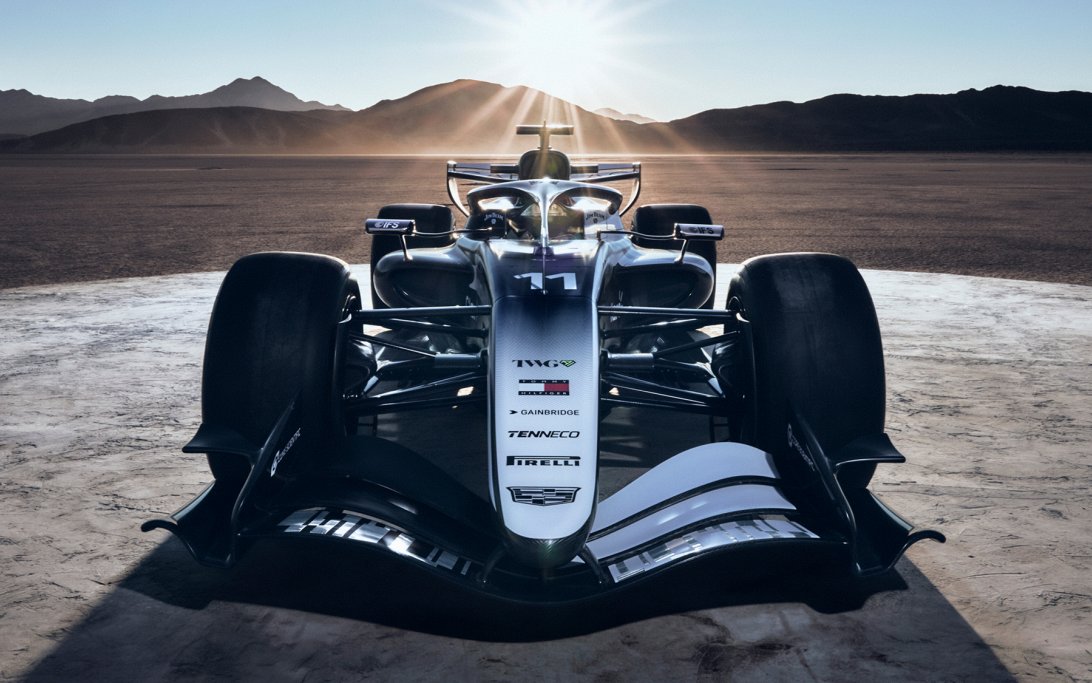
Cadillac reveals 'intentional' split-livery design for 2026 F1 entry
Cadillac has unveiled the livery for its 2026 F1 car, featuring a bold 'split' black-and-white design revealed during the Super Bowl. The team, marking GM's F1 entry, will field Valtteri Bottas and Sergio Perez with a Ferrari engine, aiming to blend American innovation with global racing prestige.
Cadillac has unveiled the striking black-and-white livery for its 2026 Formula 1 debut, with CEO Dan Towriss calling the split-color design an "intentional" statement of its new identity. The car, set to be driven by Valtteri Bottas and Sergio Perez and powered by a Ferrari customer engine, was revealed during the Super Bowl broadcast and in New York's Times Square, marking General Motors' official arrival on the F1 grid.
Why it matters:
The launch represents the culmination of a multi-year effort that began under the Andretti banner, transitioning Cadillac and GM into full-fledged F1 competitors. Choosing two of America's biggest cultural stages for the reveal signals a deliberate strategy to connect with a broad, mainstream audience beyond traditional motorsport fans, leveraging F1's growing U.S. popularity.
The Details:
- The livery features a distinct 'split design,' with one side of the car appearing lighter than the other, a deliberate aesthetic choice meant to symbolize the team's identity.
- The team, operating from bases in Silverstone, UK, and Fishers, Indiana, will use a Ferrari customer power unit for its inaugural season.
- The driver lineup pairs experienced campaigners Valtteri Bottas and Sergio Perez, offering a blend of race-winning knowledge and consistent points-scoring potential.
- Senior executives framed the launch as a milestone, emphasizing values of "American innovation, spirit, and pride" they aim to bring to the global F1 stage.
What's next:
All focus now shifts to the team's competitive debut at the 2026 Australian Grand Prix in Melbourne. The coming months will be critical for integrating the chassis with the Ferrari power unit and finalizing operations at its dual headquarters. The success of this high-profile, marketing-driven entry will be measured by its on-track performance and its ability to expand F1's commercial footprint in the United States.
Don't miss the next lap
Get the deep dives and technical analysis from the world of F1 delivered to your inbox twice a week.
Zero spam. Only high-octane analysis. Unsubscribe anytime.
Join the inner circle
Get the deep dives and technical analysis from the world of F1 delivered to your inbox twice a week.
Zero spam. Only high-octane analysis. Unsubscribe anytime.
Continue Reading
View More News