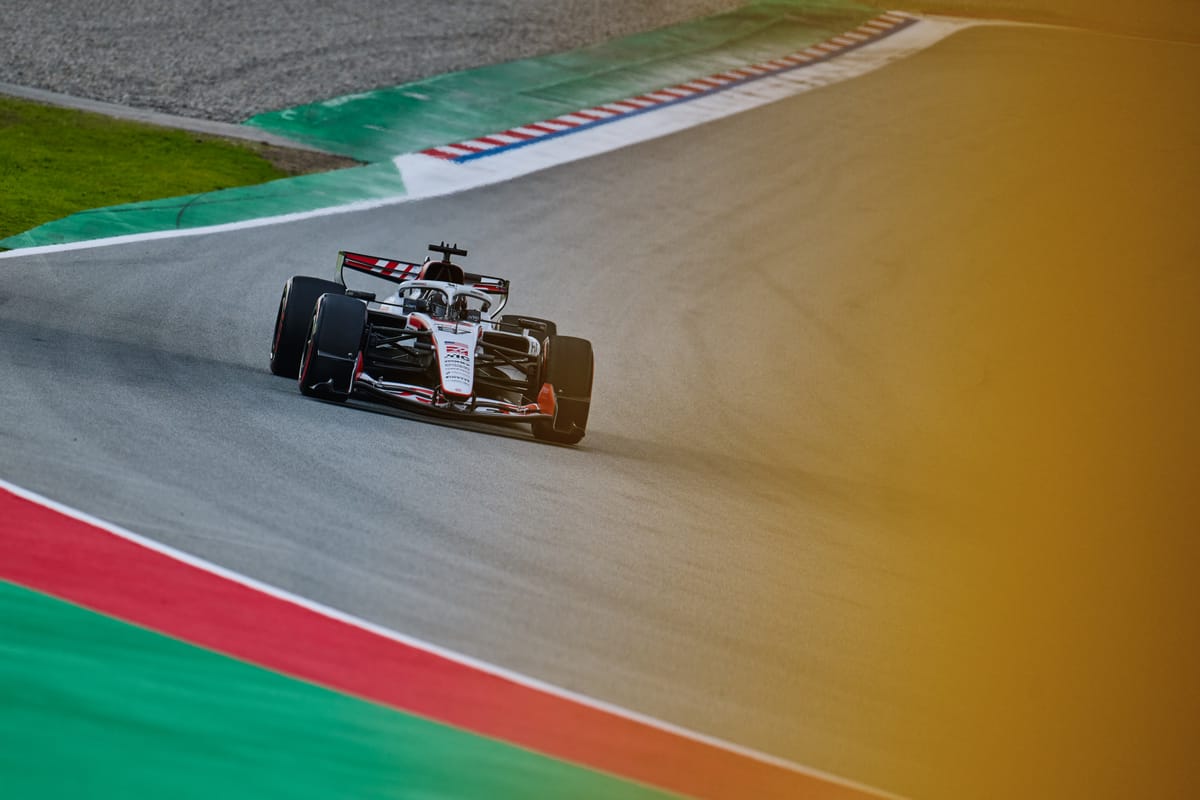
F1 2026 Qualifying's 'Scary' New Energy Dilemma
F1's 2026 cars will be so energy-limited that qualifying will hinge on perfect outlaps. Haas boss Ayao Komatsu warns that incorrect battery deployment on preparation laps could cost over half a second, turning energy preservation into a new and 'scary' qualifying skill that will be brutally exposed, especially at the start of the season.
Formula 1's 2026 cars will face such a severe energy deficit that small mistakes on an outlap could ruin an entire qualifying effort, with drivers potentially losing up to half a second per lap due to incorrect battery deployment. Haas team principal Ayao Komatsu has labeled this new vulnerability "scary," highlighting how the fight for grid position will become a high-stakes exercise in energy preservation from the very first race.
Why it matters:
Qualifying has traditionally been about extracting maximum single-lap performance, but the 2026 regulations introduce a critical strategic layer focused on energy management before the timed lap even begins. This shift could create dramatic and visible disparities between teams early in the season, turning the preparation lap into a decisive performance differentiator and adding a new dimension of driver skill and team procedure under pressure.
The details:
- Energy on a Knife-Edge: The 2026 power units are expected to be energy-starved, making the harvesting and deployment of electrical energy via the MGU-K absolutely critical to lap time. This scarcity extends to qualifying, not just races.
- The Outlap Conflict: Drivers face conflicting demands on their outlap: they must avoid using battery power to save it for the timed lap, but also drive quickly enough to warm tires, manage traffic, and stay within the maximum delta time set by the FIA.
- Technical Regulation Hurdle: Article 5.12.1 of the technical regulations complicates the issue. It mandates that driver torque demand must increase with accelerator pedal position, meaning battery deployment is triggered by throttle input—not a separate button. The only way to conserve battery is through extreme throttle sensitivity.
- Barcelona Test Revelation: During recent tests, Haas discovered that speed carried through the final sector of the outlap (e.g., Turn 14 in Barcelona) is crucial. Too little speed ruins the lap start; too much throttle wastes precious battery energy before the timed lap begins.
- Circuit-Specific Challenges: The problem will be exacerbated at circuits like Baku. In the tight castle section, deploying energy is pointless for straight-line speed, but an accidental throttle application could drain the battery, leaving nothing for the long main straight and costing huge time.
What's next:
Teams face a steep and unpredictable learning curve. Pre-season testing in Bahrain, with its heavy braking zones ideal for energy recovery, will not accurately reflect the challenge of the season opener in Melbourne, where Albert Park is notoriously difficult for energy harvesting.
- Komatsu warns that even teams confident in Bahrain will face "a completely different condition" in Australia, making early-season consistency a huge challenge.
- This energy management puzzle will become a central battlefield in 2026, placing a premium on perfect driver procedure and sophisticated team simulation to master the outlap before the clock even starts.
Don't miss the next lap
Get the deep dives and technical analysis from the world of F1 delivered to your inbox twice a week.
Zero spam. Only high-octane analysis. Unsubscribe anytime.
Join the inner circle
Get the deep dives and technical analysis from the world of F1 delivered to your inbox twice a week.
Zero spam. Only high-octane analysis. Unsubscribe anytime.