F1's 2026 Rules: More Overtaking, But at What Cost?
F1's 2026 regulations dramatically increased overtaking in Australia, but the frantic battles were largely governed by complex energy management. While creating a spectacle, the new rules risk diminishing the role of pure driver skill, as optimizing battery deployment often outweighs traditional racing craft, raising questions about the sport's long-term direction.
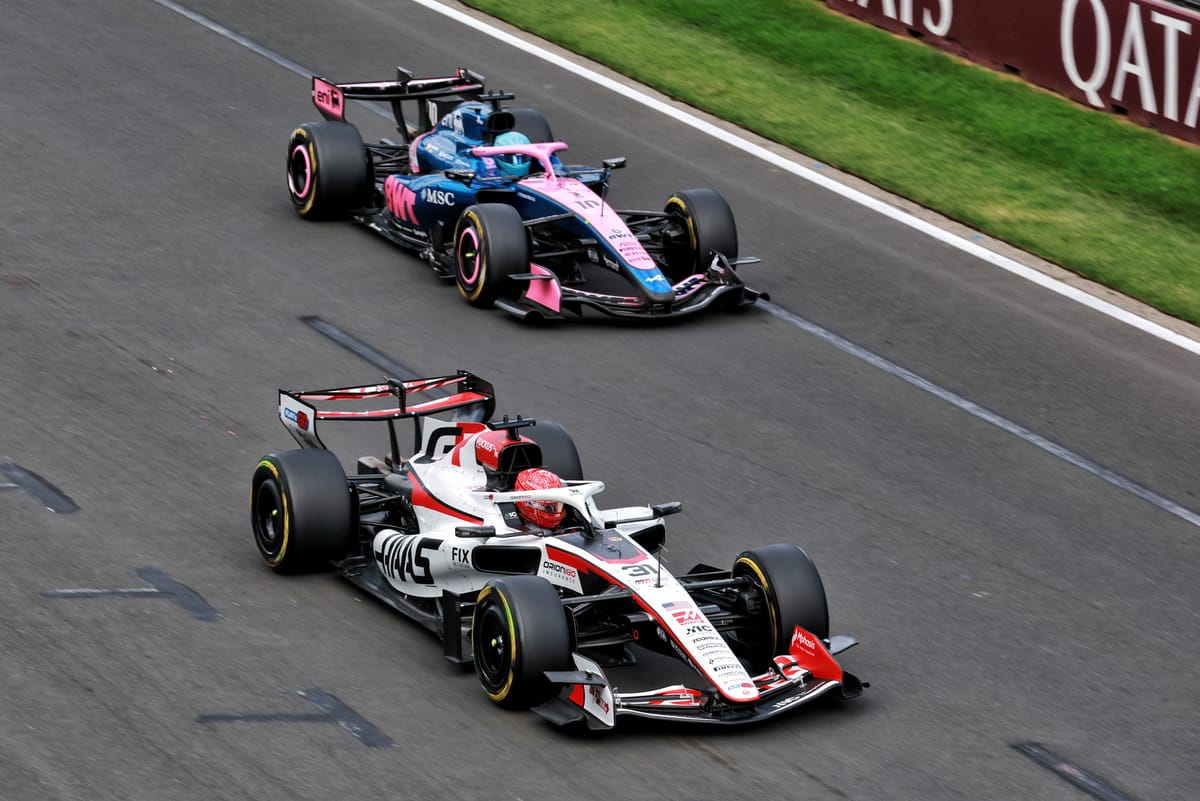
Formula 1's 2026 regulations delivered a dramatic spike in overtaking during the Australian Grand Prix, with the series touting a near-tripling of passes compared to 2025. However, this spectacle came with a significant caveat: the frantic battling, exemplified by the early duel between George Russell and Charles Leclerc, was heavily dictated by complex energy management, potentially at the expense of pure driver skill as the ultimate performance differentiator.
Why it matters:
The core trade-off of the new rules is now in sharp focus. While the stated goal of improving the racing show appears initially successful, it raises fundamental questions about the sport's identity. If sustainable, this could redefine F1 as a series where strategic energy deployment often outweighs traditional driving prowess in wheel-to-wheel combat.
The details:
- The 2026 car's energy regime—featuring a 4MJ battery requiring constant recharge and a 50/50 hybrid-V6 power split—forces drivers to constantly harvest energy, even during qualifying laps.
- This leads to widespread "lift and coast," super-clipping (using brakes to generate electricity), and driving below the grip limit in fast corners to enable harvesting, fundamentally altering driving techniques.
- The Yo-Yo Effect: The Australian GP battle showcased a new dynamic. A car could deploy electrical energy to overtake, but would then be energy-depleted on the next straight, allowing the repass. Russell described this frustrating but engaging "yo-yo" effect.
- Automation Over Instinct: Evidence suggests automated energy deployment systems can create significant, and sometimes baffling, lap time differences between teammates on straights, reducing driver agency.
- Skill Set Shift: The minute details that traditionally defined a fast driver—apex speed, car rotation, tire slip management—are now often overwhelmed by the imperative to optimize the energy cycle, changing the competitive equation.
What's next:
The sustainability of this new racing style is the critical unknown. Teams will rapidly simulate and optimize battle strategies, potentially creating prescribed passing protocols that could reduce the on-the-fly ingenuity seen in Australia.
- While minor tweaks to harvesting rates and deployment are possible, the core energy constraints are a laws-of-physics challenge that development cannot fully circumvent.
- The coming races will reveal if the thrilling, energy-constrained battles are a replicable feature or a one-off product of the unfamiliar Albert Park circuit. The fear is that short-term gains in overtaking numbers may come at a long-term cost to F1's status as the pinnacle of driver skill.
Don't miss the next lap
Get the deep dives and technical analysis from the world of F1 delivered to your inbox twice a week.
Zero spam. Only high-octane analysis. Unsubscribe anytime.
Join the inner circle
Get the deep dives and technical analysis from the world of F1 delivered to your inbox twice a week.
Zero spam. Only high-octane analysis. Unsubscribe anytime.