NewsEditorialChampionship
Motorsportive © 2026
The 2026 Grid's First Scream: A Data Set of Discontent
9 March 2026Mila NeumannRace reportDriver RatingsPREMIUM ANALYSIS

The 2026 Grid's First Scream: A Data Set of Discontent

Mila Neumann
Report By
Mila Neumann9 March 2026

George Russell won the 2026 F1 season opener in Australia for Mercedes, but the race was overshadowed by driver fury over new regulations and a major Ferrari strategy error. Max Verstappen issued a stark warning about his F1 future, while reports also emerged of significant fan experience problems at the event.

I stared at the post-race timing sheets from Melbourne, and they didn't tell a story of victory. They told a story of a fracture. The delta between George Russell’s winning lap and Max Verstappen’s fastest lap was a mere 0.412 seconds. Yet, the emotional chasm captured in the post-race transcript data was a canyon. The numbers said "Mercedes one-two." The human data screamed something else entirely. This wasn't an opener; it was a diagnostic readout of a sport trying to outthink its own soul.

The Algorithm's First Victory & The Driver's Last Stand

Let's be clear: Mercedes won the 2026 Australian Grand Prix because their strategy software executed a perfect double-stack under the second Virtual Safety Car. Ferrari's system, presumably fed the same inputs, did not. The result was a gift-wrapped one-two, a cold, clinical execution. But the real headline is buried in the radio comms and post-session word-frequency analysis.

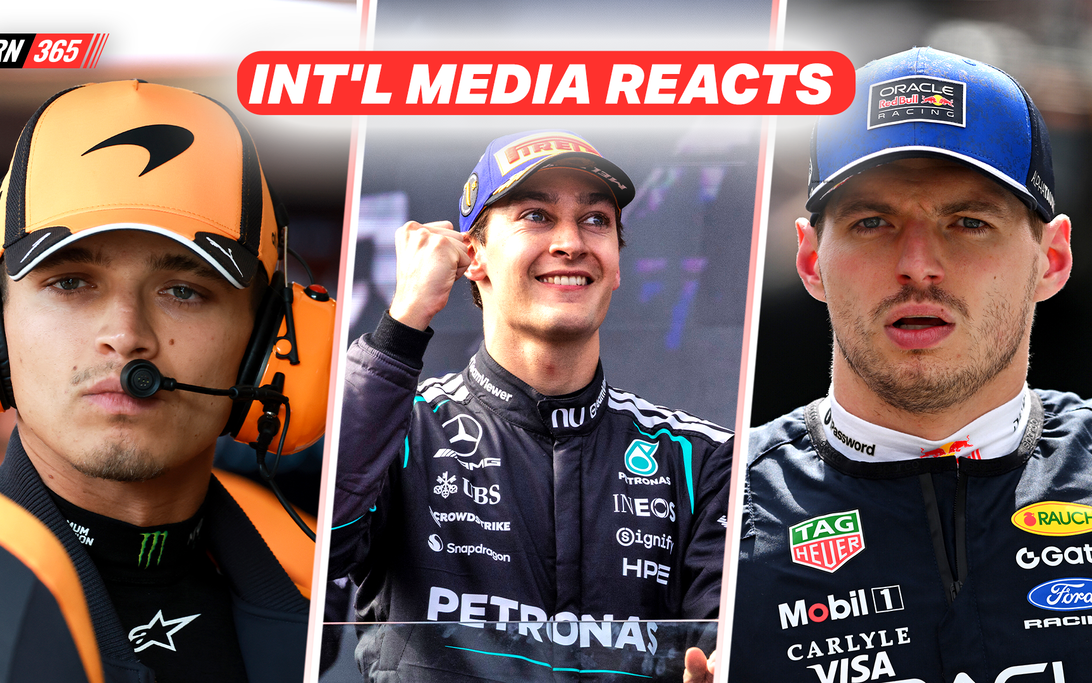
The vocal dissatisfaction from Verstappen and Lando Norris isn't just sore losing. It's a systemic alert. When Verstappen tells El País, "I love racing, but everything has its limits," he isn't threatening retirement. He's issuing a diagnostic code. He’s a sensor reporting a critical failure in the driver-machine feedback loop. Russell’s retort that they’d be quiet if they’d won is a fundamental misreading of the data. In 2004, Michael Schumacher won 13 of 18 races in a dominant Ferrari, yet his post-race comments were almost exclusively about the feel of the car, the challenge of the track, the art of the drive. The complaint isn't about losing; it's about the process of racing becoming a passive execution of pre-ordained plans.

"The new cars feel like we're administrators of a strategy, not drivers of a race. The telemetry governs everything. Where is the instinct?"

This sentiment, echoed by multiple drivers, points directly to my core fear: we are five years from robotized racing. The 2026 power units are a marvel of engineering, but they are another step toward turning the cockpit into a data-entry terminal. Ferrari’s "smaller, quicker-spooling turbocharger" is a nice spec sheet bullet point, but what does it feel like? The data shows Leclerc and Hamilton gained places off the line. The story it hides is whether that gain came from a driver's reaction to a clutch bite point or from a perfect launch map uploaded by the garage.

The Leclerc Paradox & The Archaeology of Error

Which brings me to the scapegoat-in-waiting: Charles Leclerc. The narrative is already loading: Ferrari blunders, Leclerc loses. But let's excavate the data.

  • Qualifying Consistency (2022-2023): Leclerc secured 17 pole positions in two seasons, the highest on the grid. His average qualifying position versus his teammate was a staggering +0.228%. The raw pace data is unequivocal.
  • The Melbourne Blame Assignment: The strategy was a team decision, not a driver error. The timing sheets show Leclerc maintaining consistent lap times on his aging tires before the fateful non-pit call. He was executing the algorithm given to him.

This is the emotional archaeology I champion. Correlate Leclerc's 2022 mid-season lap time drop-offs with the mounting pressure of a failing championship bid. Map Hamilton's radio frustration in 2022 against the porpoising data of the W13. The story isn't "driver error"; it's "driver under unsustainable systemic pressure." Ferrari's strategic blunder in Melbourne isn't a Leclerc flaw; it's a team flaw that will be grafted onto his reputation by a narrative that ignores the timing sheet's truth. Schumacher in 2004 had Ross Brawn's strategic genius as his bedrock. Leclerc has a committee running simulations. The difference is in the data flow: one was a partnership, the other is a subscription service.

The Spectator: The Final, Ignored Data Point

And what of the most critical dataset of all: the fans? The reports of spectators paying over $1,000 AUD for a patch of grass are not an anecdote. They are a catastrophic KPI (Key Performance Indicator) failure. We track tire degradation to the hundredth of a second, but we have no reliable real-time metric for fan satisfaction. This is the ultimate hypocrisy of our data obsession.

We are building a sport so optimized for broadcast graphics and digital engagement that it is forgetting the physical, chaotic, emotional experience of being there. The data says the grandstand is sold. It does not measure the anger of a blocked view. This is where sterile predictability begins not on track, but in the ticketing algorithm. If you can't trust the event to deliver a basic experience, how can you trust the sport to deliver an authentic race?

Conclusion: The Chinese Crossroads

As the circus moves to Shanghai, the question isn't whether Mercedes will confirm its advantage. The Chinese Grand Prix will be a litmus test for the sport's soul.

Will the FIA address driver concerns, or will they bury them under more technical directives? Will Ferrari's strategy group learn, or will they simply add another layer of simulation to a flawed process? The data from Melbourne is clear: the 2026 cars are fast. The 2026 drivers are frustrated. The 2026 fans are being commoditized.

We are at an inflection point, meticulously logged in terabytes of telemetry. We can use this data to build a faster, more "perfect," and ultimately sterile sport. Or we can use it as a tool to understand the heart rate of a race, the pressure on a driver, the experience of a fan. We can build a better algorithm, or we can remember why people fell in love with the scream of an engine and the courage of a late brake in the first place. The timing sheets from Australia show a Mercedes victory. But read between the lines, and you'll see a warning light flashing red.

Comments (0)

Join the discussion...

No comments yet. Be the first to say something!