Komatsu reflects on handling Grosjean's 2012 Suzuka meltdown after Webber clash
Haas F1 boss Ayao Komatsu reveals he felt ill-equipped to help a distraught Romain Grosjean after the 2012 Japanese GP, where a clash with Mark Webber led to a fiery confrontation. Komatsu reflects on the lack of experience that prevented him from offering better support during the driver's low point, a regret he later shared with a forgiving Grosjean.
Ayao Komatsu, now Haas F1 Team Principal, has opened up about his regrets in managing Romain Grosjean's emotional crisis following the infamous 2012 Japanese Grand Prix. The incident, where Grosjean collided with Mark Webber just one race after returning from a ban, triggered a furious confrontation and left the young driver devastated, with a then-inexperienced Komatsu unsure how to help.
Why it matters:
This candid reflection offers a rare glimpse into the intense human pressure and interpersonal dynamics within an F1 team, far removed from the technical data. It highlights the critical, often overlooked, role of a race engineer as a driver's mental and emotional anchor during extreme lows, a skill that comes with experience rather than engineering knowledge alone.
The details:
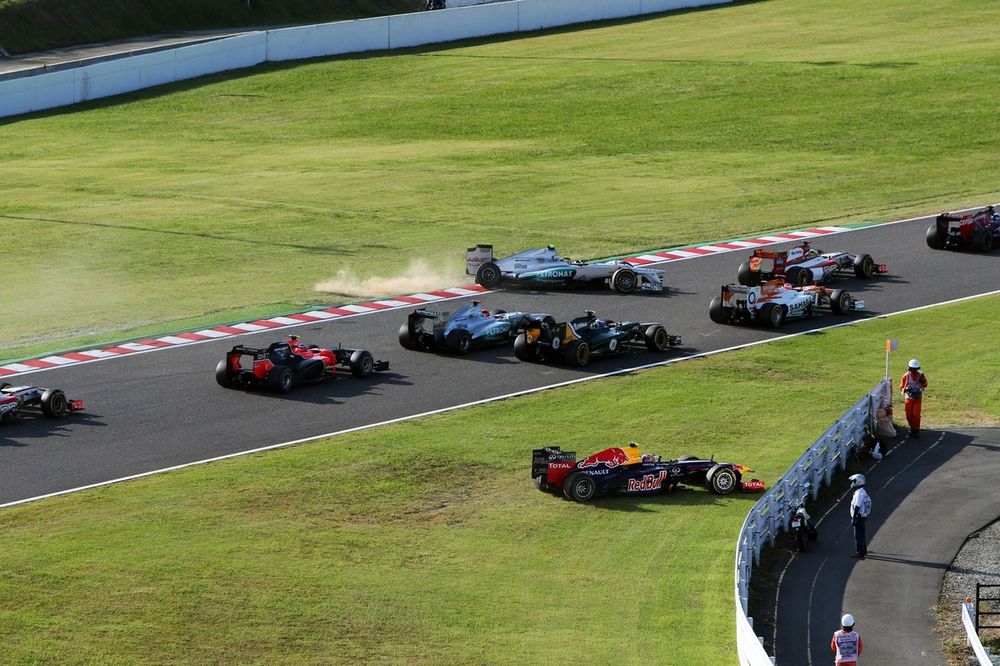
- The flashpoint was the 2012 Japanese GP, where Grosjean, starting a promising fifth for Lotus, made contact with Mark Webber's Red Bull at Turn 2 on the opening lap, ending the Australian's race.
- A furious Webber stormed to Grosjean's driver room post-race, "punching and kicking every single panel" before storming off, leaving Grosjean crying on the floor.
- Komatsu, Grosjean's race engineer at the time, admits he "shied away" and didn't know how to handle the driver's distress or the volatile situation, lacking the life experience to provide meaningful support.
- Years later, at Interlagos, Komatsu apologized to Grosjean, stating he felt he let him down. Grosjean's response was gracious, noting they "grew up together" and he wouldn't change anything.
- The period was a low point for Grosjean, who was in the early stages of working with a sports psychologist—a move he credits for later improvements in his mental approach and performance.
The big picture:
The 2012 season was a turbulent one for Grosjean, marked by first-lap incidents that culminated in a one-race ban after a multi-car crash in Belgium. The Suzuka fallout with Webber, who publicly labeled him a "first-lap nutcase," intensified the scrutiny. Komatsu's story underscores how driver performance is inextricably linked to mental fortitude and team support systems. While Grosjean would go on to secure 10 podiums in his career, this era defined his early reputation and the personal battles fought behind the scenes.
What's next:
Komatsu's introspection informs his leadership at Haas today, emphasizing holistic driver management. For Grosjean, his F1 chapter closed after the 2020 season, but his career revival in IndyCar demonstrates the resilience forged through those difficult early F1 experiences. The anecdote remains a powerful lesson in the evolution of F1's culture towards greater recognition of mental health and the human element within the sport.
Don't miss the next lap
Get the deep dives and technical analysis from the world of F1 delivered to your inbox twice a week.
Zero spam. Only high-octane analysis. Unsubscribe anytime.
Join the inner circle
Get the deep dives and technical analysis from the world of F1 delivered to your inbox twice a week.
Zero spam. Only high-octane analysis. Unsubscribe anytime.
Continue Reading
View More News