McLaren's Cautious 2026 Development: A Calculated Risk for the Title Defense
McLaren is opting for a patient, comprehension-focused development strategy for its 2026 car, skipping early testing and major initial upgrades. This approach risks starting the season behind rivals like Ferrari but aims for stronger long-term development. The gamble is heightened by the team having the least wind tunnel time as reigning champion, limiting its ability to fix a flawed concept quickly.
McLaren is taking a deliberate, understanding-first approach to its 2026 car development, a strategy that represents a high-stakes gamble. As reigning champions facing the most radical technical reset in decades, the team is prioritizing deep comprehension of its new machine over rapid-fire upgrades, accepting a potential short-term performance deficit to build a stronger long-term foundation.
Why it matters:
In a complete regulatory reset where all previous advantages are nullified, the initial development philosophy can set a team's trajectory for years. McLaren's choice to potentially start the season with a less-developed car, while rivals like Ferrari push aggressive early updates, could either be a masterstroke of patience or a critical misstep that cedes crucial early ground in the title fight.
The details:
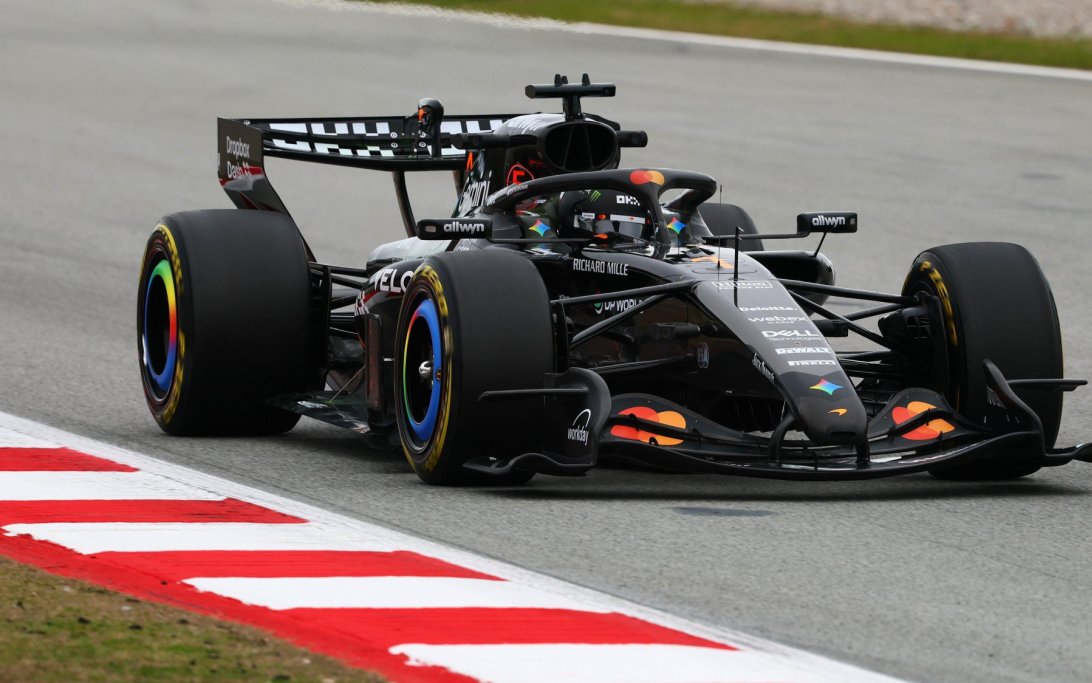
- Team Principal Andrea Stella has framed the 2026 rules as a "complete competitive reset," justifying a methodical pace. The team deliberately skipped the first two days of pre-season testing in Barcelona to maximize workshop development time, a move Stella confirmed was always "plan A."
- Technical Director Rob Marshall indicated that significant updates between testing and the first race are unlikely, with understanding the fundamentally new package taking absolute priority over an aggressive upgrade push.
- Stella described the challenge as "building an aeroplane while in flight," highlighting the complexity of integrating new power units, chassis, and aerodynamics simultaneously.
- A key structural handicap is McLaren's wind tunnel allocation. As the 2025 constructors' champion, the team enters 2026 with only 70% of the permitted wind tunnel hours—the lowest on the grid. This severely limits its ability to react and develop aerodynamically if the initial car concept proves flawed.
What's next:
The first races of 2026 will be the ultimate litmus test. If McLaren's MCL40 has a solid, predictable baseline, its philosophy of measured development could allow it to out-evolve rivals who may have rushed flawed concepts to the track. However, if the car is fundamentally off the pace, its limited wind tunnel time will make a recovery exceptionally difficult, potentially jeopardizing its title defense before the season truly begins. The strategy is a definitive high-risk, high-reward scenario.
Don't miss the next lap
Get the deep dives and technical analysis from the world of F1 delivered to your inbox twice a week.
Zero spam. Only high-octane analysis. Unsubscribe anytime.
Join the inner circle
Get the deep dives and technical analysis from the world of F1 delivered to your inbox twice a week.
Zero spam. Only high-octane analysis. Unsubscribe anytime.
Continue Reading
View More News