Mercedes Breaks 42-Year F1 Victory Drought
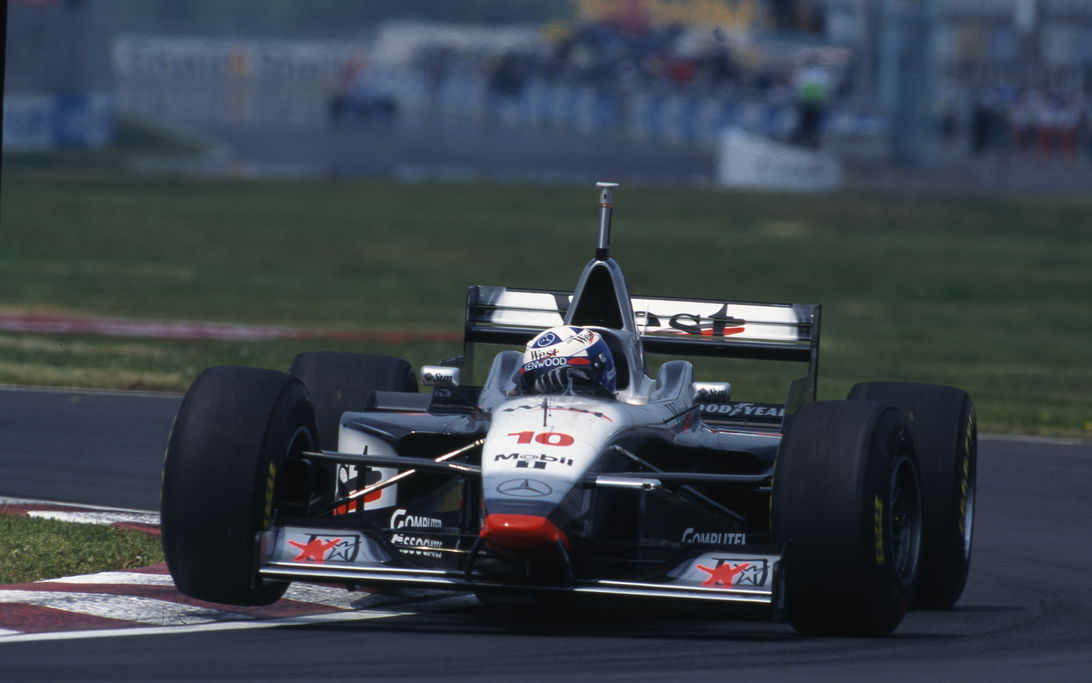
David Coulthard's victory at the 1997 Australian Grand Prix ended Mercedes-Benz's 42-year wait for a Formula 1 win, a symbolic return for the manufacturer after its post-Le Mans hiatus and the foundation of its future dominance.
On March 9, 1997, David Coulthard's win at the Australian Grand Prix ended Mercedes-Benz's 42-year absence from the top step of a Formula 1 podium. The victory, achieved with McLaren, marked the storied German marque's triumphant return to winning ways after its withdrawal from motorsport following the 1955 Le Mans disaster and validated a promising but initially frustrating partnership.
Why it matters:
This victory was far more than just another race win; it was the symbolic rebirth of a legendary manufacturer in F1. It proved Mercedes could compete at the highest level again and laid the first stone on the path to its future dominance, ultimately transforming the team into the sport's most successful constructor in the modern hybrid era.
The details:
- The race was chaotic from the start. Pole-sitter Jacques Villeneuve's title defense ended at Turn 1 when he was collected in a crash caused by Eddie Irvine's Ferrari.
- Heinz-Harald Frentzen, Villeneuve's Williams teammate, inherited the lead and built a commanding advantage on a two-stop strategy while most others planned a single stop.
- Frentzen's race unraveled due to a slow second pit stop and catastrophic brake failure. With just three laps remaining, his right-front brake gave way, sending him spinning into the gravel and out of the race.
- Coulthard, who had qualified fourth, inherited the lead and cruised to a 20-second victory over Michael Schumacher's Ferrari, with McLaren teammate Mika Häkkinen completing the podium.
The big picture:
The win ended multiple droughts simultaneously. For Coulthard, it was his first victory in over a season. For McLaren, it was their first win in 50 races, ending three successive winless campaigns. But for Mercedes, the significance was historical. Juan Manuel Fangio's 1955 Italian Grand Prix win had been their last before the withdrawal. Coulthard's 1997 triumph in Melbourne closed a 42-year chapter of absence and opened a new one of competition, setting the stage for the championship-winning McLaren-Mercedes partnership of the late 1990s and the unparalleled success of the Mercedes-AMG Petronas team in the 2010s and beyond.
Don't miss the next lap
Get the deep dives and technical analysis from the world of F1 delivered to your inbox twice a week.
Zero spam. Only high-octane analysis. Unsubscribe anytime.
Join the inner circle
Get the deep dives and technical analysis from the world of F1 delivered to your inbox twice a week.
Zero spam. Only high-octane analysis. Unsubscribe anytime.