Mosley's 2003 Warning on F1's Manufacturer Reliance Proved Prescient
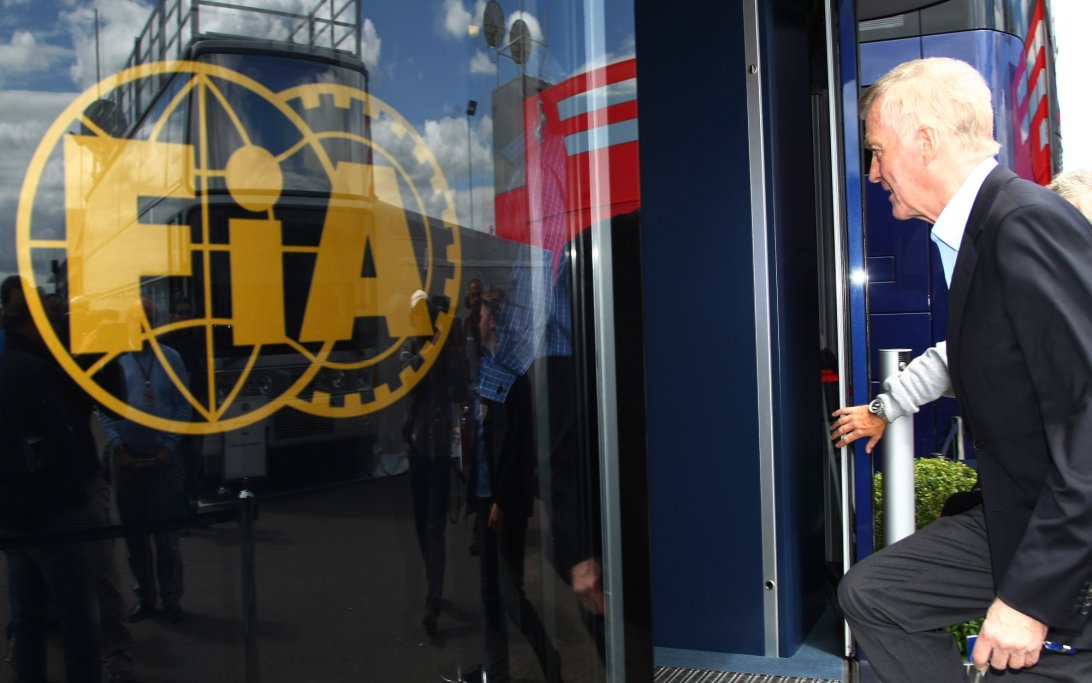
In 2003, FIA President Max Mosley warned that F1's growing reliance on manufacturer teams, which could leave at will, threatened the sport's stability. His prediction came true as several giants exited by 2009. While today's cost-capped, commercially booming F1 has changed the financial game, his core argument about the essential role of independent teams continues to resonate.
Two decades ago, FIA President Max Mosley warned that Formula 1's growing dependence on major car manufacturers posed a severe risk to the sport's long-term stability, a prediction that materialized within years as several giants departed. His argument championed independent teams as the championship's only reliable pillar, a view that remains debated as F1's commercial landscape transforms.
Why it matters:
The core tension Mosley identified—between the flashy, deep-pocketed manufacturer teams and the dedicated, F1-dependent privateers—remains a central theme in the sport's governance. His warning highlights a perpetual strategic dilemma: how to harness manufacturer resources and prestige without making the sport vulnerable to their corporate whims. The recent introduction of the cost cap is a direct attempt to address the competitive imbalance he foresaw.
The details:
- In a 2003 statement, Mosley outlined two major difficulties with the manufacturer influx: it created a competitive imbalance that could bankrupt independent teams during a recession, and it built the sport on an unstable foundation.
- He noted that aside from Ferrari, manufacturers like BMW, Ford, Honda, Mercedes, and Renault had "a history of coming and going."
- His Solution: Mosley insisted the championship's health depended on protecting and nurturing a solid group of independent teams like Williams and Jordan, whose core business was F1 itself.
- The Aftermath: His prediction proved accurate. By 2009, BMW, Honda, and Toyota had exited F1, following Ford's earlier withdrawal.
The big picture:
Today's F1 presents a complex evolution of Mosley's warning. While manufacturer involvement is still dominant and expanding—with Audi's upcoming entry—the financial dynamics have shifted radically. The sport's global boom and the introduction of the cost cap have helped independent teams not just survive but become valuable assets, somewhat mitigating the financial chasm he feared. However, the grid now has fewer true privateer teams than ever, with most entities having significant corporate or manufacturer backing.
Between the lines:
Mosley's underlying point was about sustainability versus spectacle. Manufacturers bring technological arms races and global marketing power, but their commitments are tied to boardroom decisions and brand strategy. Independents are inherently tied to F1's fate. The current era, with its budget limits and soaring franchise values, attempts to merge both worlds: attracting manufacturers while creating a ruleset where a well-run private team can compete. The enduring relevance of his warning is a reminder that for all its glamour, F1's long-term health rests on a stable competitive foundation, not just big-name participation.
Don't miss the next lap
Get the deep dives and technical analysis from the world of F1 delivered to your inbox twice a week.
Zero spam. Only high-octane analysis. Unsubscribe anytime.
Join the inner circle
Get the deep dives and technical analysis from the world of F1 delivered to your inbox twice a week.
Zero spam. Only high-octane analysis. Unsubscribe anytime.
Continue Reading
View More News