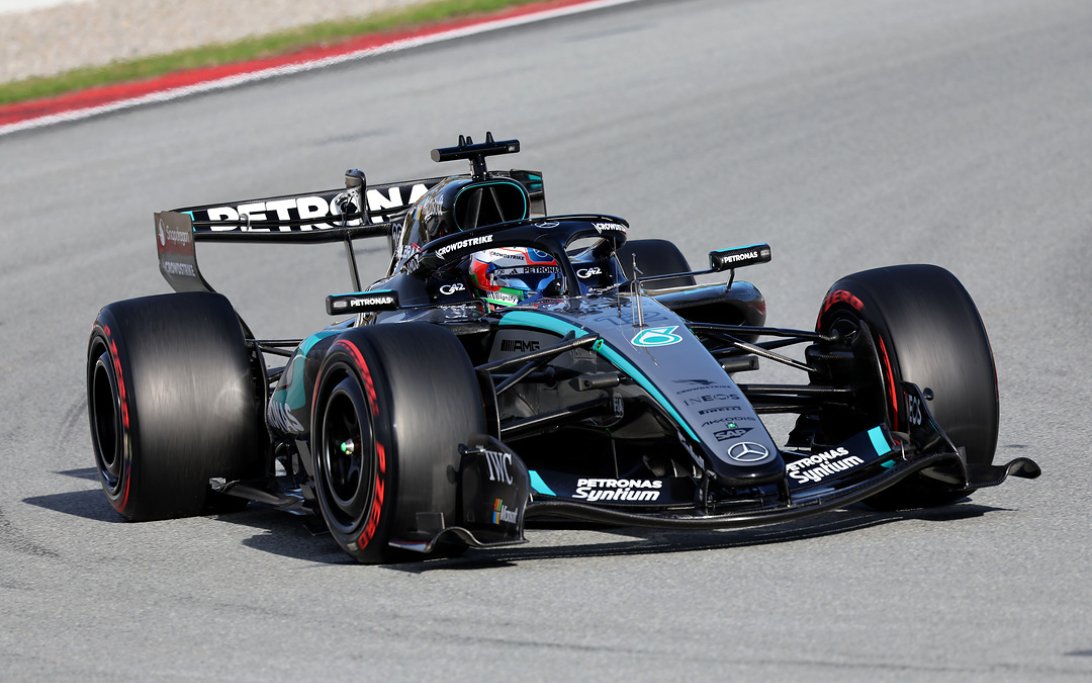
Wolff notes 'interesting' energy management differences between Mercedes, Red Bull and Ferrari in Barcelona
Mercedes' Toto Wolff observed distinct energy management strategies from Ferrari and Red Bull during pre-season testing in Barcelona. Under new 2026 technical regulations that increase electrical power, how teams recover and deploy energy is a new key differentiator, with Wolff noting the season will reward the cleverest engineers and drivers in mastering this complex element.
Mercedes Team Principal Toto Wolff highlighted a notable divergence in how top Formula 1 teams managed their new, more powerful energy recovery systems during the Barcelona shakedown. While emphasizing the difference was not necessarily an advantage for rivals, his comments underscore the varied strategic approaches emerging under the 2026 technical regulations, where mastering energy deployment will be critical to race-winning performance.
Why it matters:
The shift to regulations with increased electrical output has made energy management a central battlefield. How teams choose to recover and deploy that energy around a lap—a process visible in data traces—can define their car's character and race-day potential. Early differences, as spotted by a top team principal, signal that the learning curve and subsequent development race in this area could be a decisive factor in the early season competitive order.
The Details:
- Wolff pointed out clear variations in the energy management maps used by Ferrari and Red Bull compared to Mercedes during the Barcelona running, calling the observation "quite interesting."
- He cautiously framed the difference, stating the rivals' approach was "different to us. It wasn't better, but it was just different."
- The new technical regulations for 2026 mandate a significant boost in the electrical energy output of the power units, forcing teams to explore new methods for harvesting and spending energy throughout a lap.
- Several drivers have already suggested these changes could alter the look of wheel-to-wheel battles, as drivers and teams learn the optimal points on track to utilize their energy reserves.
What's next:
The true test will come in race conditions, where strategic energy deployment is paramount. Wolff predicts the teams and drivers who most cleverly adapt their mapping and usage will rise to the top.
- He noted that initial setups might favor single-lap performance, but races could reveal flawed strategies, saying teams may realize "on Sunday, we haven’t mapped it in the way you’re winning races."
- The steep learning curve, accelerated by observing competitors and accumulating mileage, will separate the contenders. The "most clever guys in the car and on the engineering side are going to win" this development race, according to Wolff.
Don't miss the next lap
Get the deep dives and technical analysis from the world of F1 delivered to your inbox twice a week.
Zero spam. Only high-octane analysis. Unsubscribe anytime.
Join the inner circle
Get the deep dives and technical analysis from the world of F1 delivered to your inbox twice a week.
Zero spam. Only high-octane analysis. Unsubscribe anytime.
Continue Reading
View More News