The 2026 Pre-Season Numbers Are In: A Story of Reliability, Crisis, and the Ghost of Mechanical Grip
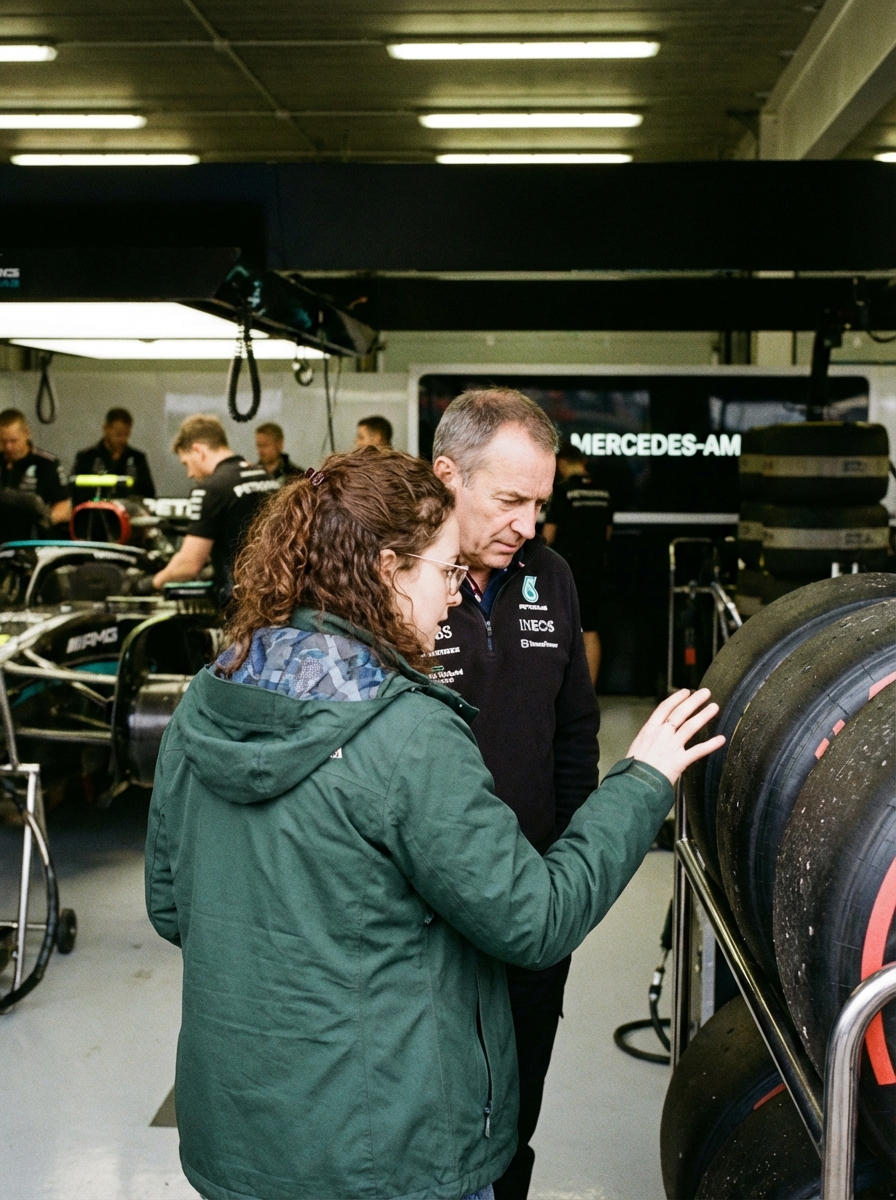
The stopwatches are, for now, irrelevant. In the deceptive calm of pre-season testing, where sandbags are as common as carbon fiber, the true story isn't written in purple sectors. It's etched in the relentless, grinding tally of lap totals. These numbers are the raw, unglamorous heartbeat of a new car's life—a story of pistons firing, systems surviving, and data flowing. Or, in one stark case, a story of silence. The 2026 figures, fresh from Barcelona and Bahrain, don't just hint at reliability; they scream a fundamental truth we keep forgetting: without a solid mechanical foundation, all the aerodynamic witchcraft in the world is just fragile theater.
The Endurance Champions and the Data Goldmine
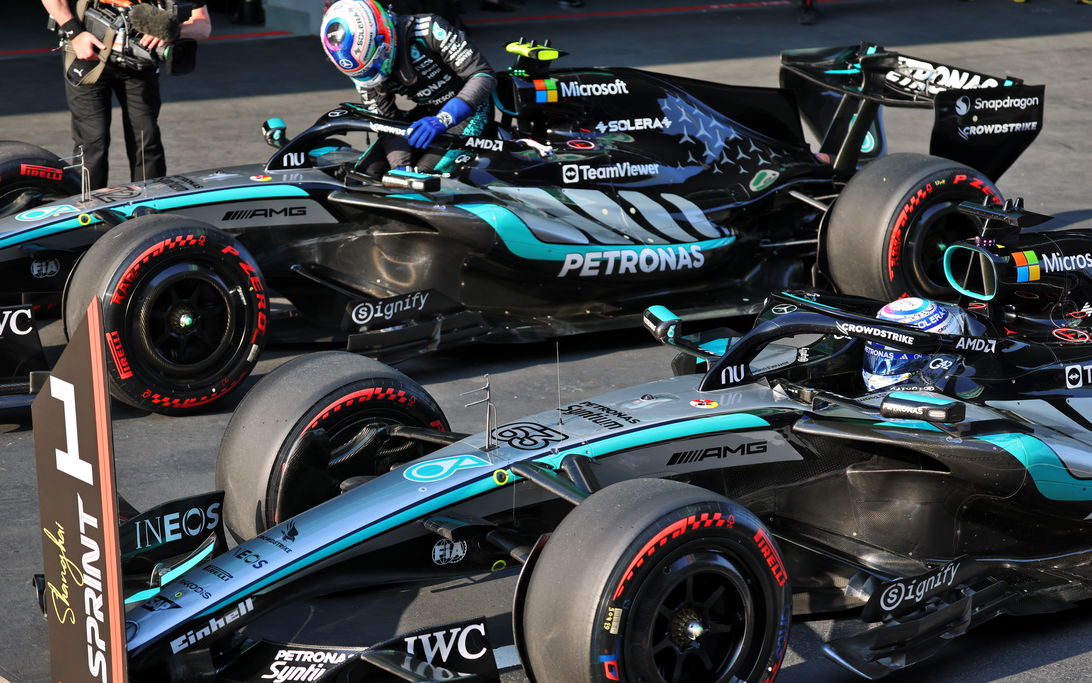
Let's start with the workhorses. Mercedes, not topping a single headline-grabbing timesheet, quietly executed a masterclass in operational precision. 1,204 laps. That's a staggering distance, a testament to the W17 chassis's inherent durability. More interesting, however, is who followed them: Haas, with 1,175 laps. This is the narrative I find delicious. While the big budgets chase marginal aero gains, Haas—often a paragon of simple, robust design—has done what it does best: build a car that survives. They, along with Ferrari, McLaren, Racing Bulls, and Alpine (all surpassing 1,000 laps), have banked a currency more valuable than a single fast lap: confidence.
Pre-season mileage is the unsung hero of development. It's the thousands of data points on tire degradation, brake cooling, and powertrain hysteresis that create a platform for speed. A car that breaks teaches you nothing.
This "1,000-Lap Club" has gifted their drivers and engineers something priceless: feel. They've felt the tires go through multiple cycles, understood the brake migration, mapped the power unit's quirks. This is where mechanical grip and tire management—the lost arts—are truly refined. It's a brutal, iterative process of listening to the car's base structure, not just its aerodynamic shell. It reminds me of the 1990s Williams FW14B; yes, it had active ride, but its genius was in its holistic integrity. It was a solid machine first, a flying one second. These high-mileage teams are, perhaps unintentionally, honoring that old-school principle.
Aston Martin's Crisis: When Complexity Fails
And then we have the cautionary tale. Aston Martin's 394 laps is not a number. It's a five-alarm fire. Less than half the tally of the next-lowest team, it paints a picture of a garage in crisis, chasing gremlins in a complex system. While the article cites "unspecified technical issues," my skepticism of marketing hype points to one likely culprit: overcomplication.
The modern F1 obsession with aerodynamic complexity often comes at the cost of mechanical robustness. In the push to sculpt the perfect airflow, to manage every vortex, the foundational systems—hydraulics, cooling, electronic control units—can become an afterthought, packed into ever-tighter spaces. When you're chasing downforce at the expense of everything else, you build a glass cannon. It looks devastating in the wind tunnel, but it shatters on the first true test of endurance.
This is where my belief in the undervalued nature of mechanical grip becomes a stark warning. A car built around a stable, predictable mechanical platform can be driven on the edge, can slide, can race. A car that is an intricate, fragile aero device is hostage to its own complexity. If Aston Martin's issues are aero-related—say, a cooling system compromised for a tighter bodywork concept—they are in for a world of pain. They are now forced into a recovery effort that will steal focus from performance development, a brutal penalty before a wheel has turned in anger.
The Hidden Stories and the AI Horizon
Look deeper into the midfield, and more subtle stories emerge. Reigning champions Red Bull at 969 laps and the new Audi team at 941 are in a curious spot. Respectable, but trailing the leaders. For Red Bull, this could be the first crack in the monolith. We've been told for years that Max Verstappen's dominance is a product of supreme skill, but I've always argued it was primarily the product of a chassis and aero package so superior it created its own reality. If their reliability is even a whisper off the peak Mercedes/Haas pace, and if the field has closed the aero gap, we might finally see that driver skill put under a more democratic pressure. The car's advantage may no longer be large enough to mask the normal variables of racing.
This all leads to my inevitable, looming prediction. Watching teams wrestle with these ever-more-complex aerodynamic and mechanical trade-offs only solidifies my belief: By 2028, this will be obsolete. The logical end point is AI-controlled active aerodynamics. Why spend thousands of hours designing a static front wing endplate to manage a vortex, when an intelligent system can morph the entire car's surface in real-time to optimize for the car ahead, the corner entry, the tire temp? It will eliminate DRS as a crude tool and make races chaotic, unpredictable, and tragically, even less driver-dependent. The art of managing a car's finite grip will be handed to an algorithm.
Conclusion: The Australian Verdict Awaits
So what do these 2026 testing totals truly tell us? They tell us Mercedes and Haas have built tractors—and I mean that as the highest compliment. They are robust, data-rich platforms. They tell us Aston Martin may have built a museum piece, beautiful but fragile. The true pace will erupt in Melbourne, of course. But remember this: speed is fleeting. Reliability is a promise. A car that survives can be upgraded. A car that can't run teaches you only how to fail.
The ghosts of simpler, mechanically-grounded cars like the FW14B whisper that the path to greatness is through understanding the machine from the ground up, not just the air around it. The 2026 season may well be won not by the team with the most revolutionary floor, but by the one that best remembers the simple, brutal arithmetic of the lap counter.
Join the inner circle
Get the deep dives and technical analysis from the world of F1 delivered to your inbox twice a week.
Zero spam. Only high-octane analysis. Unsubscribe anytime.
Continue Reading
View More News