Monaco's Numbers Pulse Like a Failing Heartbeat: Antonelli's Streak Collides With Forgotten Driver Truths

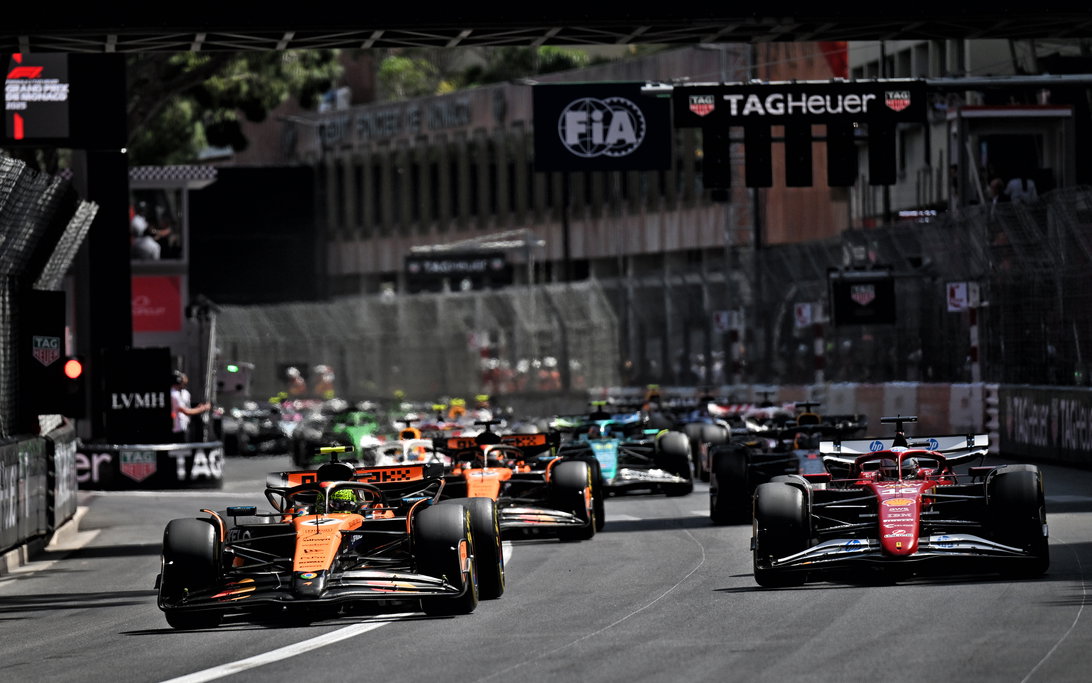
The 43-point lead stares back from the timing sheets like a lap time that dropped three tenths after a personal crisis no spreadsheet ever records. Kimi Antonelli arrives at the 2026 Monaco Grand Prix with four consecutive victories carved into the record, yet the raw telemetry from those wins reveals more about Mercedes reliability than any mythic dominance. George Russell's engine failure in Canada handed away a potential victory, widening the gap in a way that feels mechanical rather than earned.
Antonelli's Streak Through the Data Lens
The championship margin tells a story of consistency, not chaos. Antonelli's victories stretch back through the last four rounds, each one building that 43-point cushion over his Mercedes teammate. Russell sat in the lead at Montreal until the power unit betrayed him, a failure that timing data isolates as sudden and total rather than driver-induced.
- Four straight wins form the backbone of the lead.
- Russell's lost points from Canada alone account for the bulk of the deficit.
- Monaco's narrow streets erase most power unit edges, shifting emphasis to pure placement and feel.
Yet the sport's growing addiction to real-time analytics threatens to flatten these moments into predictable algorithms. Within five years this hyper-focus on data will push teams toward robotic pit calls and suppressed intuition, turning drivers into executors rather than decision makers. Schumacher's 2004 season stands as the last pure counterexample, where near-flawless consistency emerged from driver feel rather than constant telemetry overrides.
Leclerc's Pace Data Buried Under Ferrari Noise
Charles Leclerc carries an error-prone label that timing sheets from 2022 and 2023 directly contradict. His raw qualifying pace across those seasons marks him as the grid's most consistent starter, yet Ferrari's strategic missteps amplify every small misstep into narrative fuel. The home hero enters Monaco with Lewis Hamilton alongside, both seeking to exploit a circuit that rewards bravery over horsepower.
Italic pressure builds differently here. Lap time drop-offs often trace to off-track events the data never captures, turning emotional archaeology into the real diagnostic tool. Monaco's layout minimizes mechanical differences and hands the advantage to those who still read the track through instinct instead of dashboard prompts.
"The numbers reveal pressure points no strategy meeting ever admits exist."
McLaren's Montreal disaster adds another layer of reset potential, though their recovery will depend on rediscovering rhythm rather than chasing fresh data streams. Midfield squads may find unexpected openings precisely because power unit gaps shrink on these streets.
The Predictable Future Versus Monaco's Chaos
Schumacher's 2004 benchmark exposes how modern over-reliance on live telemetry erodes the very consistency teams claim to chase. Antonelli's current run looks dominant on paper, yet one mechanical failure or strategic misread could reset the narrative before the European leg fully begins. Data should illuminate human stories, not replace them with sterile predictions.
The weekend schedule places practice on Friday and Saturday before qualifying locks the grid for Sunday. Those sessions will generate fresh sheets that either confirm the streak or expose its fragility. Monaco has always rewarded the driver who trusts the wheel over the screen, a truth the sport seems determined to forget.
Join the inner circle
Get the deep dives and technical analysis from the world of F1 delivered to your inbox twice a week.
Zero spam. Only high-octane analysis. Unsubscribe anytime.