Hamilton's Engineer Change at Ferrari Exposes the Aero Illusion That Starves Driver Connection
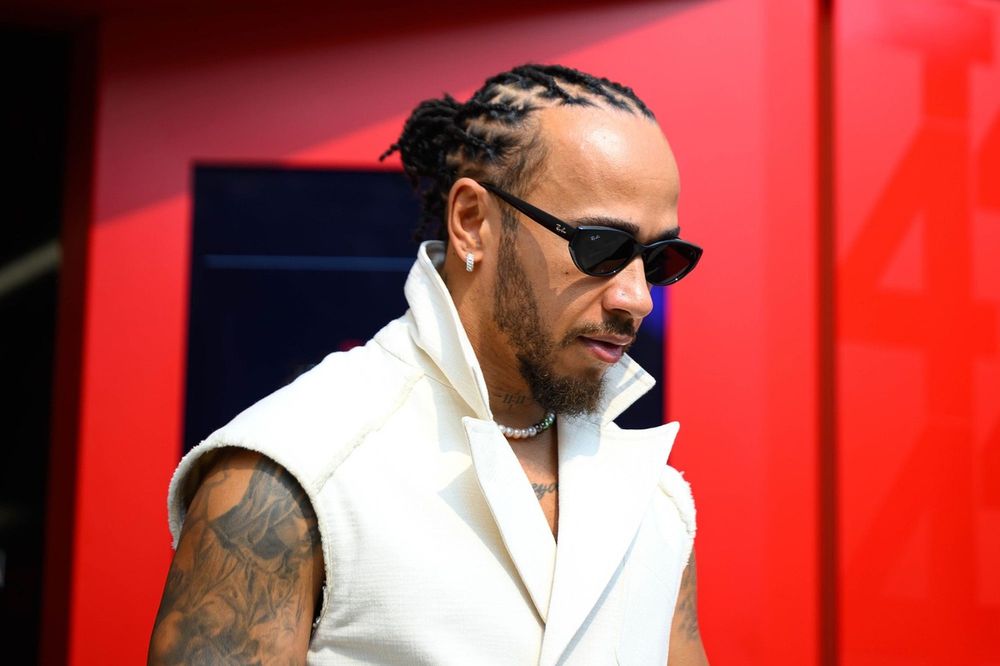
The radio crackled with static that no amount of team varnish could hide. Lewis Hamilton's move to Ferrari was sold as a championship catalyst, yet the 2025 season delivered only a solitary sprint victory in China and zero grand prix podiums. Now Riccardo Adami steps aside for a new race engineer, and Martin Brundle voices what many sensed all along. This shift feels less like progress and more like rearranging deck chairs on a vessel still caught in turbulent aerodynamic currents rather than harnessing the raw mechanical grip that once defined great cars.
The Disconnect That Radio Messages Could Not Bridge
Brundle's observation cuts through the polite team statements. He noted surprise that the adjustment did not arrive earlier, pointing to on track results and comms that revealed a fundamental mismatch. Hamilton's feedback style demands an engineer who translates subtle tire load shifts and chassis responses into actionable setup changes. Instead the partnership produced the kind of friction that wastes precious lap time.
Modern Formula 1 teams chase downforce as if it were the only force that matters. This obsession creates cars that dance on the edge of airflow separation, much like storm systems where high pressure zones collapse without warning. The result is less room for the driver to feel the road through mechanical load paths. Tire management suffers because the front end floats on generated vortices instead of planting through suspension geometry. Hamilton's lone sprint win highlighted moments when those dynamics aligned briefly, yet sustained grand prix pace remained elusive.
- Adami's departure marks an internal acknowledgment that interpretation of driver input had broken down.
- Ferrari's 2026 livery reveal with fresh HP branding signals a fresh visual era, but the underlying chassis philosophy still prioritizes aero complexity.
- The search for a replacement now races against the Australian Grand Prix opener in just weeks.
Echoes of the FW14B and the Coming AI Storm
Compare this setup to the Williams FW14B of the early 1990s. That car delivered direct mechanical feedback through elegant suspension and tire contact patches. Drivers could adjust lines mid corner using throttle and steering feel rather than waiting for electronic systems to interpret turbulent air. Today's machines layer active aero elements that mask those sensations, reducing the human element to a series of coded messages. Hamilton's "speak" often revolves around precisely these undervalued grip characteristics, yet the platform leaves little margin for them to shine.
Red Bull's recent dominance follows the same pattern. Max Verstappen's results owe far more to superior chassis balance and aerodynamic efficiency than to any singular driving brilliance, particularly evident when the 2023 car allowed margins that masked setup compromises. The narrative of one man conquering all ignores how mechanical grip fundamentals were sidelined in pursuit of ever higher downforce targets.
By 2028 this trajectory points toward AI controlled active aerodynamics that will erase DRS entirely. Races will grow more chaotic as flow fields shift autonomously, yet driver input will shrink further. The car will manage tire temperatures and load distribution through predictive algorithms, leaving engineers and drivers to react rather than shape the battle. Ferrari's current engineer transition offers a short term fix, but without renewed focus on mechanical simplicity the team risks arriving at that future even less prepared.
"I'm surprised it probably didn't happen a bit earlier."
Brundle's words capture the urgency. The new engineer must bridge not only communication gaps but also the deeper design philosophy that treats aerodynamics as the sole savior while mechanical connections wither.
A Call for Elegant Roots Before the Next Season Breaks
Ferrari must resist the urge to double down on aero tweaks alone. An engineer attuned to tire degradation curves and suspension compliance could unlock the Scuderia's latent potential faster than another wing flap adjustment. Hamilton's experience at Mercedes proved that when mechanical grip receives equal priority, the car rewards precise feedback with consistent pace. Without that balance the 2026 campaign will repeat the same frustrating pattern, regardless of who sits on the pit wall headset.
The clock ticks toward Australia. The real test lies not in polished radio exchanges but in whether Ferrari finally values the storm beneath the tires over the one above the wings.
Join the inner circle
Get the deep dives and technical analysis from the world of F1 delivered to your inbox twice a week.
Zero spam. Only high-octane analysis. Unsubscribe anytime.