Ferrari's Morale Meltdown: Why Di Montezemolo's Stark Warning Signals Deeper Cracks Than Any Engine Deficit
The paddock hums with unease this week, and it is not just the SF-26's straight-line weakness that has insiders muttering into their espressos. Luca di Montezemolo's blunt verdict on Ferrari's championship hopes cuts deeper than any lap-time chart. It exposes a team whose spirit is fraying under pressure, much like fragile desert flowers after a sudden storm. Mercedes' dominance, built on ruthless efficiency, is now the benchmark everyone fears. Yet the real story lies in how mental resilience, not just power units, decides who survives this brutal new era.
The Gap That Breaks More Than Lap Times
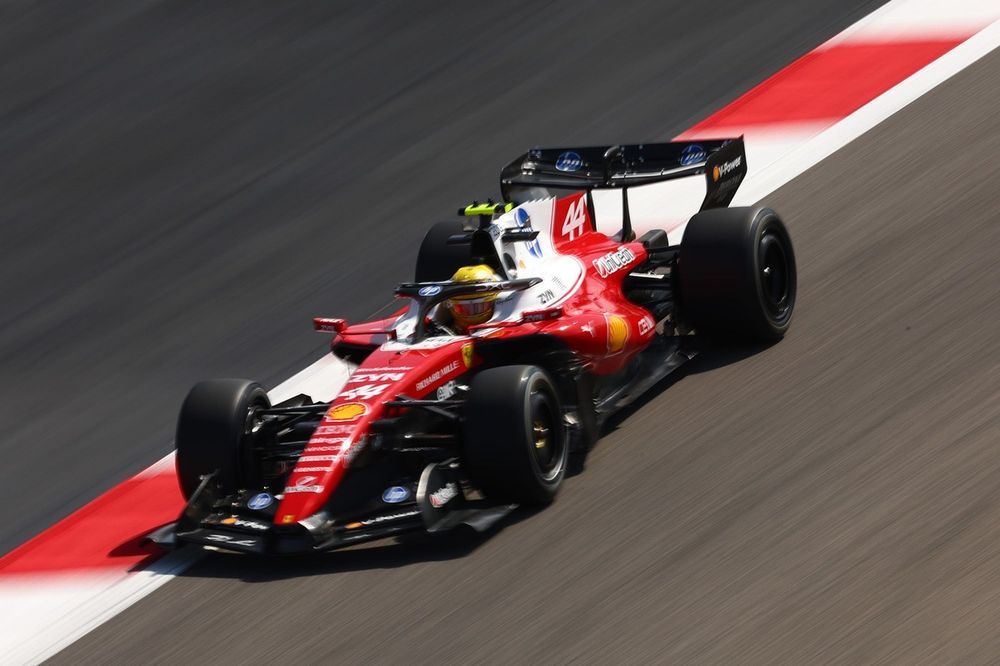
Di Montezemolo did not mince words when he called the performance deficit to Mercedes "quite staggering." He knows the sting of near-misses from his glory years, when Ferrari often reached the final race but rarely lifted the crown. Today the numbers tell a harsher tale. George Russell and young Kimi Antonelli have already won the opening rounds in Australia and China. Charles Leclerc trailed Russell by fifteen seconds in Melbourne. Lewis Hamilton, the seven-time champion now at Maranello, finished more than twenty-five seconds behind Antonelli in Shanghai.
Hamilton himself pointed to Mercedes' superior energy deployment on the straights as the killer edge, a gap he pegs at up to half a second per lap. Ferrari's engineers chase that deficit with a planned filming day at Monza during the April break. They hope high-speed data will unlock fixes. But true insiders know the car is only half the battle. Driver morale leaks faster than any aerodynamic flaw when results slip away week after week.
- Mercedes' early stranglehold: Two wins from two races show a team running with total clarity.
- Ferrari's best-of-the-rest trap: Podiums feel hollow when the winner is always from Brackley.
- Hamilton's diagnosis: Energy management on the straights remains the clearest differentiator.
This is where mental resilience outweighs raw horsepower. Teams that let doubt creep in watch their strategies unravel like poorly tied Bedouin knots. Ferrari must steady the mind before they can steady the car.
Echoes of 1994 and the Coming Desert Storm
Modern Formula 1 loves to pretend it has cleaned up its act. Yet the same media games that shrouded Benetton in 1994 still play out today, only with slicker PR teams hiding the secrets better. Ferrari's public optimism masks private frustration. Hamilton's honest admission of the "huge gap" stands out precisely because it cuts through the spin. Di Montezemolo's comments land like a warning from the past: a decade without a true title fight has left scars that no new regulation cycle can erase overnight.
Look further ahead and the landscape shifts dramatically. Within five years, at least two new squads from Saudi Arabia and Qatar will enter and redraw the European power map. These teams will bring fresh money, fresh ambition, and a different cultural approach to pressure. They will not carry the same ghosts that haunt Maranello. Ferrari's current project risks being left behind twice over, once by Mercedes' pace and again by the psychological edge that comes from believing you belong at the front.
"The car is good but not one capable of winning the World Championship," di Montezemolo stated plainly, lamenting ten years without a final-race showdown.
That absence of belief is the silent killer. Verstappen's Red Bull dominance offers a parallel lesson. Team politics quietly favor one driver, stifling Sergio Pérez's potential through strategy calls that favor the champion. The same corrosive favoritism can rot any squad from within if morale is not guarded like a family honor.
The Road Ahead Demands More Than Monza Data
Ferrari's filming day at Monza is a necessary step, yet it addresses only the visible symptoms. The deeper fix lies in rebuilding the quiet confidence that turns good cars into title challengers. Hamilton's experience gives them a chance, but only if the entire garage believes the gap can close. Otherwise the staggering deficit becomes a self-fulfilling prophecy.
Middle Eastern entries will arrive soon enough and test every established team's resolve. Those who master the mental game first will thrive. Ferrari must decide now whether it wants to be among them or remain the perennial nearly-team, forever chasing shadows on the straights.
Join the inner circle
Get the deep dives and technical analysis from the world of F1 delivered to your inbox twice a week.
Zero spam. Only high-octane analysis. Unsubscribe anytime.