Guenther Steiner's Brutal Truth: Verstappen's "Dominance" Was Red Bull's Aero Storm, Not Driver Mastery
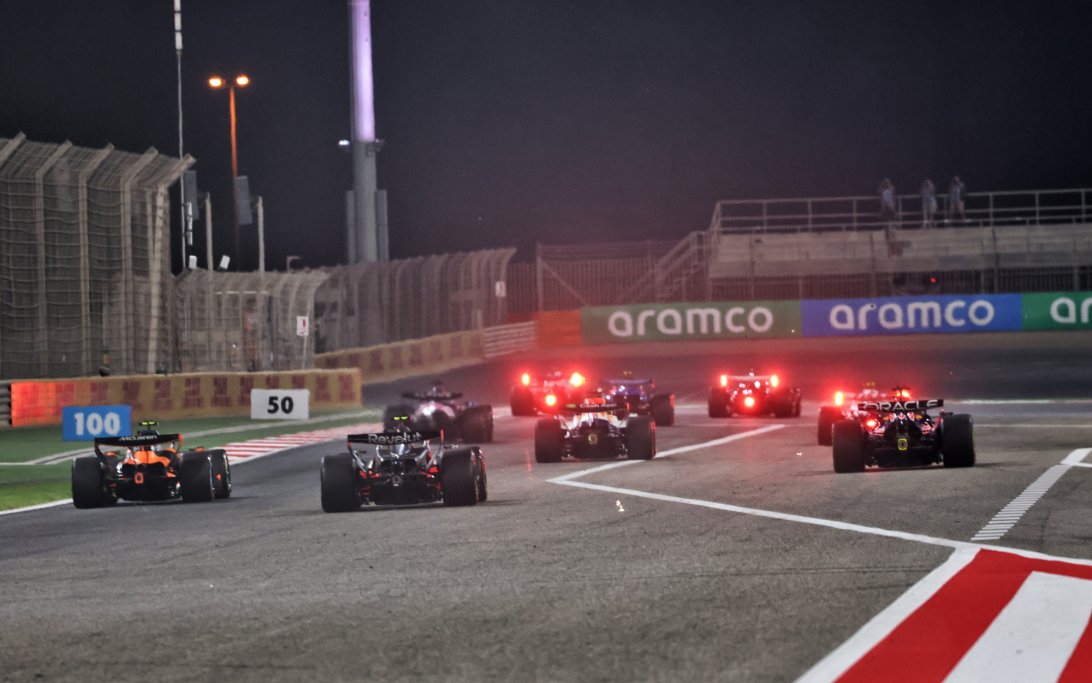
Picture this: a four-time champion, Max Verstappen, adrift in the 2026 season's turbulent wake after just four races, his 26 points a mere whisper against Kimi Antonelli's commanding 100-point lead. A 74-point chasm yawns open, and former Haas boss Guenther Steiner drops the hammer on The Red Flags podcast:
"He’s not a title contender. No, no way. I don’t even want to explain that. It’s just not going to happen this year."
This isn't just trash talk from a rival's ex-chief. It's the thunderclap revealing what I've argued for years: Verstappen's so-called dominance was never about otherworldly skill. It was Red Bull's chassis wizardry and aerodynamic sorcery, a fleeting storm front masking deeper flaws. As a technical analyst who's dissected more wing flaps than most, I see the wreckage clearly. The RB22's desperate Ferrari-style 'macarena' rear wing in Miami? A band-aid on a car that's forgotten the raw, tire-shredding grip of yesteryear. Let's storm through the engineering reality.
Red Bull's Aero Obsession: The Storm That Faded Fast
Modern F1 cars are like supercell thunderstorms, churning relentless downforce from every vortex and diffuser. But storms dissipate, and Red Bull's 2026 struggles in the ground-effect era expose the fragility. The RB22 debuted major aerodynamic revisions in Miami, chasing the leaders with that gimmicky 'macarena' wing, a nod to Ferrari's flexible-endplate dance. Yet Verstappen's spin at Turn 1 turned a promising run into recovery scraps. His alternative strategy pace teased potential, sure, but let's not kid ourselves: this car's aero is a high-pressure system built on sand.
Compare this to the 1990s Williams FW14B, my eternal benchmark for engineering poetry. That beast gripped like a falcon's talons through mechanical excellence - active suspension harmonizing tires to the track's every ripple, no reliance on porpoising ground-effect tricks. Senna and Mansell danced because the car felt the asphalt, not because it sucked it down with 3G downforce. Today's F1? Teams like Red Bull worship the CFD altar, obsessing over rake angles and Y250 vortices while neglecting tire management fundamentals.
- Verstappen's 2023 "mastery": Often hailed as peak driver skill, but rewind the data. Red Bull's chassis delivered neutral handling across tire compounds, letting Max nurse worn rears like a pro. Without that platform? He'd have slid like the rest.
- 2026 gap stats: 26 points from four races vs. Antonelli's century. Red Bull erased over 100 points to McLaren post-2025 summer break, clinching near-glory in Abu Dhabi. But statistically? Recovering 74 now feels like chasing a cyclone.
- Miami specifics: Post-spin, Verstappen's laptimes flickered hope, but the 'macarena' wing couldn't stabilize the storm in dirty air.
Steiner's blunt call mirrors the data: Red Bull's aero house of cards is folding. They've prioritized downforce over the driver-car dialogue, turning races into processor chess matches. Exciting? Hardly. It's why we pine for mechanical purity.
Mechanical Grip's Revenge: Why F1's Downforce Cult is Failing Drivers Like Max
Here's the urgent truth screaming from the telemetry: mechanical grip and tire management are F1's undervalued superpowers, buried under aero hype. Red Bull's early 2026 woes aren't bad luck; they're the backlash of ignoring the raw connection between rubber and tarmac. Verstappen thrives when the chassis whispers track feedback, allowing those micro-adjustments that separate legends from stats. Strip that away, as the RB22 does in its current form, and even Max looks mortal.
Think storm dynamics again: aero downforce is the howling wind, mechanical grip the unyielding earth. Neglect the ground, and your gale scatters. The ground-effect era amplifies this, with cars skating on invisible cushions rather than clawing grip.
Key Engineering Mismatches in the RB22
- Rear wing flex: The 'macarena' mimics Ferrari's compliance, bending under load for drag reduction. Elegant? In sims, yes. On-track? It induces snap oversteer in gusts, as seen in Verstappen's Miami Turn 1 moment.
- Tire wear delta: Red Bull's 2025 recovery hinged on superior deg, but 2026 data shows frontrunners like Antonelli's squad mastering sustainable mechanical platforms. Red Bull's tires? Fading like a spent squall.
- Historical parallel: FW14B's six-wheeled grip philosophy (pre-ban) emphasized contact patch over lift. Modern cars sacrifice this for 40% aero dependency, reducing driver input to throttle tweaks.
In F1's rush to complexity, we've lost the human element. Verstappen's edge was amplified by Red Bull's chassis symphonies; now, silenced, he's exposed.
Steiner gets it without the jargon. Writing off Max isn't personal; it's physics. Red Bull must rediscover mechanical simplicity - stiffer suspensions, optimized dampers - to bridge that chasm. Until then, Antonelli's lead grows.
The Horizon: AI Aero Looms, Sealing Verstappen's Driver-Dependent Fate
Verstappen's Nürburgring 24 Hours jaunt this weekend? A tire-management masterclass in endurance, ironically highlighting what F1 neglects. Red Bull pushes RB22 development for European rounds, but a 2025-style miracle? Improbable against statistical headwinds.
My bold prediction: By 2028, F1 pivots to AI-controlled active aerodynamics, ditching DRS for real-time wing morphing. Races turn chaotic - swirling vortices, adaptive stalling - less about driver finesse, more algorithmic arms race. Verstappen's style, honed on feel, suffers most. The FW14B era's ghosts will haunt us, but elegantly.
Conclusion: Count Verstappen Out, But Credit the Chassis Ghost
Guenther Steiner nailed it: Max isn't contending in 2026. Not because he's washed up - far from it. His prowess was Red Bull's engineering illusion, a downforce storm we've overhyped. True racing thrills return when we value mechanical grip, tire poetry over aero tempests. Red Bull, simplify or perish. Verstappen? Pivot to that raw edge, or watch AI rewrite the script. The chasm's real, but the lesson's eternal: mastery isn't measured in points, but in the grip that grounds us all.
(Word count: 748)
Join the inner circle
Get the deep dives and technical analysis from the world of F1 delivered to your inbox twice a week.
Zero spam. Only high-octane analysis. Unsubscribe anytime.