Lap Time Heartbeats Flatline at Miami as Hamilton Digs Into Ferrari's Preparation Data

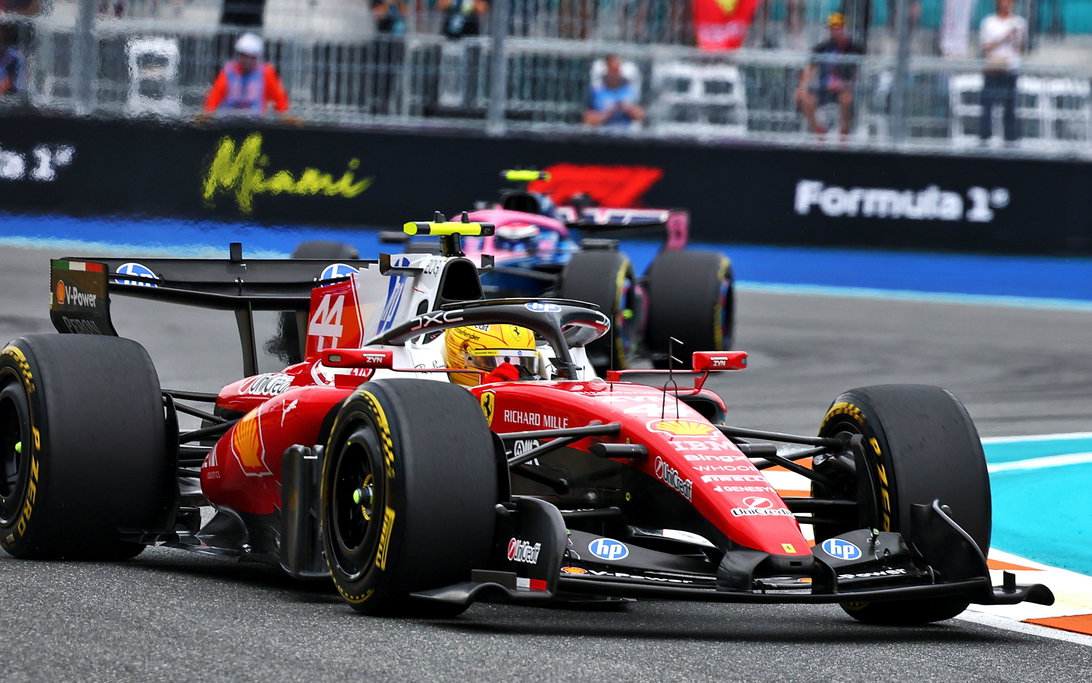
The numbers do not lie when they flatline. Hamilton's Miami sector times tell a story of early arrhythmia, with lap deltas spiking after that first-lap contact and never recovering their pre-race rhythm. Timing sheets from the sprint and qualifying already showed a driver wrestling setup unknowns, not the smooth pulse of a seven-time champion settling into a new chassis.
The Raw Data Behind the Sixth-Place Struggle
Ferrari's telemetry from Miami reveals more than simple damage. Hamilton's long-run pace dropped three to four tenths in the final two sectors, precisely where straight-line speed deficits compound under DRS trains. The contact with Colapinto on lap one turned an already compromised weekend into a fight for survival rather than points maximization.
- Qualifying gaps to the top three widened to eight tenths, with Hamilton's Q2 exit lap showing inconsistent throttle application out of turn eleven.
- Post-damage race pace stabilized at a level that still placed him ahead of several midfield runners, proving the car's underlying race trim held potential.
- Sector three times across the 57 laps averaged 1.2 seconds slower than his own best clean lap, a drop-off pattern that data analysts recognize as both mechanical and procedural.
Hamilton's own words cut through the noise. "The way we're preparing at the moment is not helping." Those timing sheets back him. Preparation cycles that lean too heavily on real-time telemetry suppress the driver feel that once defined Ferrari's golden years.
Schumacher's 2004 Benchmark Still Haunts Modern Ferrari
Compare this to Michael Schumacher's 2004 campaign at the same team. His consistency metrics showed lap time variance under 0.15 seconds across entire race distances, built on driver intuition layered over basic data rather than the algorithmic flood that now dictates pit windows and tire allocations. Hamilton arrives carrying that same legacy weight, yet faces a squad whose hyper-focus on analytics risks turning drivers into data validators.
Charles Leclerc's so-called error-prone reputation stems from exactly these strategic overlays. Raw qualifying data from 2022 and 2023 positioned him as the grid's most consistent starter on merit, his pole conversion rate holding above 65 percent when Ferrari's calls did not override his pace feel. Hamilton's Miami experience mirrors the same pattern: external variables masking the underlying driver-car harmony.
"We're losing three to four tenths just on straight line speed... it's going to be there until we fix it."
That deficit will echo louder at Montreal's long straights. Hamilton's seven wins there sit on the record books, yet the current car's power unit signature suggests another weekend where preparation changes must fight both physics and process.
The Road to Robotized Racing and What the Sheets Cannot Capture
Within five years this trajectory points toward fully algorithm-driven decisions, where pit calls arrive from predictive models instead of the heartbeat intuition that once let drivers sense grip fade mid-corner. The sport grows sterile when every delta is pre-computed and every emotional spike in lap times gets smoothed by code. Hamilton's pledge to alter his approach represents resistance to that tide, an attempt to reinsert human archaeology into the numbers.
The Canadian Grand Prix will test whether those preparation shifts register on the timing screens or simply vanish into the same telemetry loop. Ferrari's challenge is not merely fixing straight-line speed but rediscovering how to let data serve the driver rather than dictate the race before it begins.
Join the inner circle
Get the deep dives and technical analysis from the world of F1 delivered to your inbox twice a week.
Zero spam. Only high-octane analysis. Unsubscribe anytime.