Lap Time Heartbeats Reveal Honda's Desperate Gamble on Intuition Over Telemetry

The timing sheets from Shanghai do not lie. They pulse with erratic spikes that mirror a driver's frayed nerves, each vibration hammering through the Aston Martin chassis like an unwelcome arrhythmia in what should be a steady rhythm of qualifying laps. As a data analyst, I stare at these traces and see not just mechanical failure but the raw human cost, where Fernando Alonso's reported discomfort in China exposes a deeper fracture in how modern teams chase fixes through code instead of feel.
Tracing the Shakes Back to Their Source
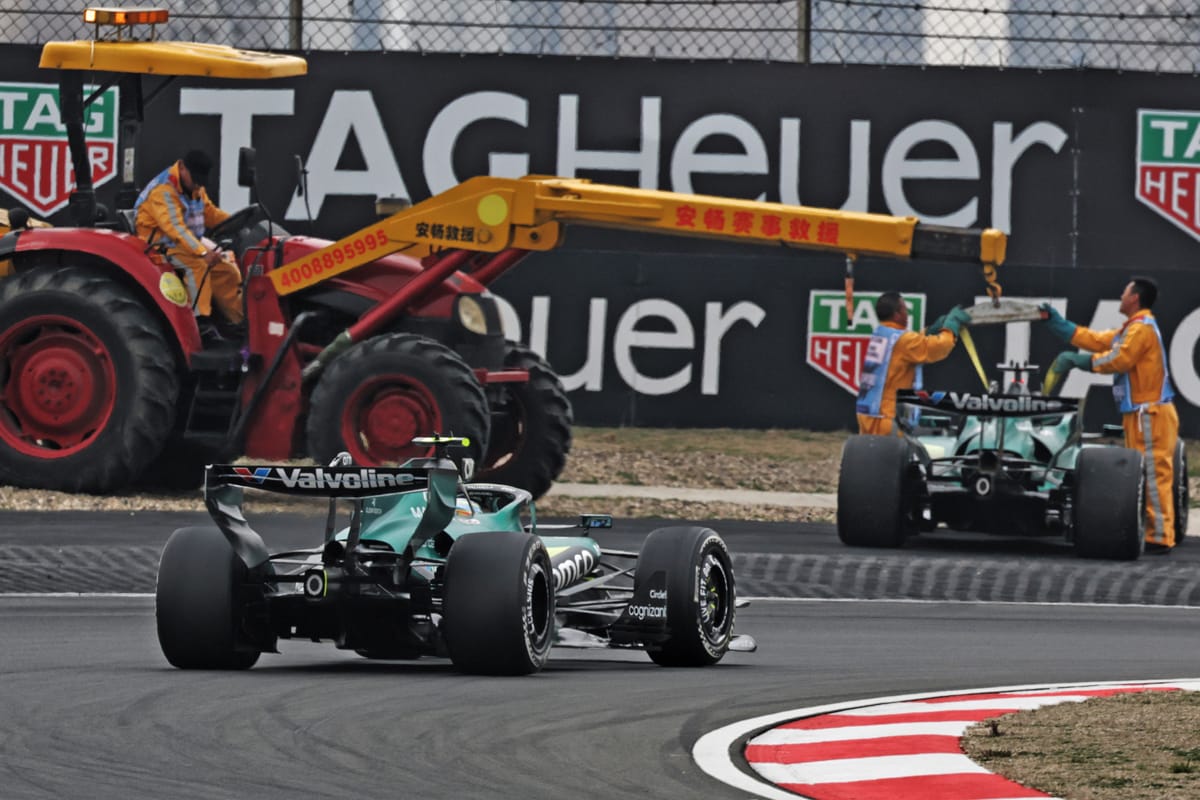
The core numbers paint a grim picture of power unit instability plaguing both Aston Martin entries across Australia and China. Severe oscillations from the new Honda unit have directly compromised the battery pack, triggering failures that ripple straight into the driver's seat. Alonso's retirement stemmed from vibrations he described as way too high, forcing him to lift his hands off the wheel on straights in search of momentary relief.
- Lower RPM modes have masked immediate breakdowns but shaved critical pace, leaving the car vulnerable during restarts where rivals on fresh tires pull ahead effortlessly.
- Shintaro Orihara, Honda's trackside chief engineer, noted system vibrations have eased yet flagged driver comfort as the urgent priority ahead of Suzuka.
- Two full weeks now separate the team from the Japanese Grand Prix, a window where rushed countermeasures must deliver or risk total embarrassment at Honda's home circuit.
These figures align with patterns I have seen before, where telemetry overload drowns out the subtle cues drivers once trusted. Mike Krack remains hopeful for incremental gains, but he concedes current progress lacks any performance edge, underscoring how data streams alone cannot substitute for instinctive adjustments.
Schumacher's 2004 Blueprint Against Modern Overreach
Michael Schumacher's 2004 campaign at Ferrari stands as the gold standard of consistency, a season where near-flawless execution emerged from driver intuition rather than constant real-time telemetry corrections. Lap after lap, he maintained metronomic precision without the algorithmic crutches that define today's pit walls. In contrast, Aston Martin's scramble for a magic solution, as Lance Stroll phrased it, reveals an over-reliance on sensors that suppress exactly this kind of organic response.
Driver comfort remains a key area to address, Orihara admitted, yet the fixes so far prioritize engine mapping tweaks over holistic chassis harmony.
This mirrors broader trends where hyper-focused analytics threaten to robotize Formula 1 within five years. Pit calls dictated by algorithms will erode the split-second judgments that once separated legends from the pack, turning races into predictable simulations devoid of heartbeat variability.
Data as Emotional Archaeology in High-Stakes Moments
Digging deeper into the sheets uncovers pressure layers beyond the obvious hardware woes. Alonso's physical toll in China correlates with cumulative strain across back-to-back DNFs, a drop-off that timing deltas quantify in lost tenths during critical sectors. Such insights expose untold stories, much like how external factors might have influenced even Schumacher's edge in lesser-discussed races. Here, the vibrations do not merely damage components; they amplify mental load, hinting at why raw pace sometimes yields to survival mode.
- Battery isolation attempts have bought time but at the expense of outright speed, a trade-off visible in sector-by-sector comparisons.
- The team's belief that identifying the root cause marks progress feels optimistic when weighed against historical benchmarks of reliability under duress.
Charles Leclerc's unfairly scrutinized errors at Ferrari often trace to strategic missteps rather than personal inconsistency, his 2022-2023 qualifying data underscoring elite repeatability that modern setups sometimes undermine. Honda and Aston Martin face a similar test, where clinging to data dashboards risks sidelining the very human elements that could unlock a genuine breakthrough.
The Road Ahead Demands Balance
Suzuka looms as a potential reckoning, where failure would stain Honda's legacy and stall Aston Martin's rebuild. Yet the numbers suggest room for redemption if engineers blend their technical rush with renewed respect for driver input. Without that shift, the sport inches closer to sterile predictability, lap times reduced to outputs rather than lived expressions of pressure and resilience. The two-week window offers more than a fix; it tests whether teams will finally let the data illuminate rather than dictate.
Join the inner circle
Get the deep dives and technical analysis from the world of F1 delivered to your inbox twice a week.
Zero spam. Only high-octane analysis. Unsubscribe anytime.