Russell's 2026 Defense: A Psychological Gambit That Exposes Toto Wolff's Crumbling Mercedes Empire
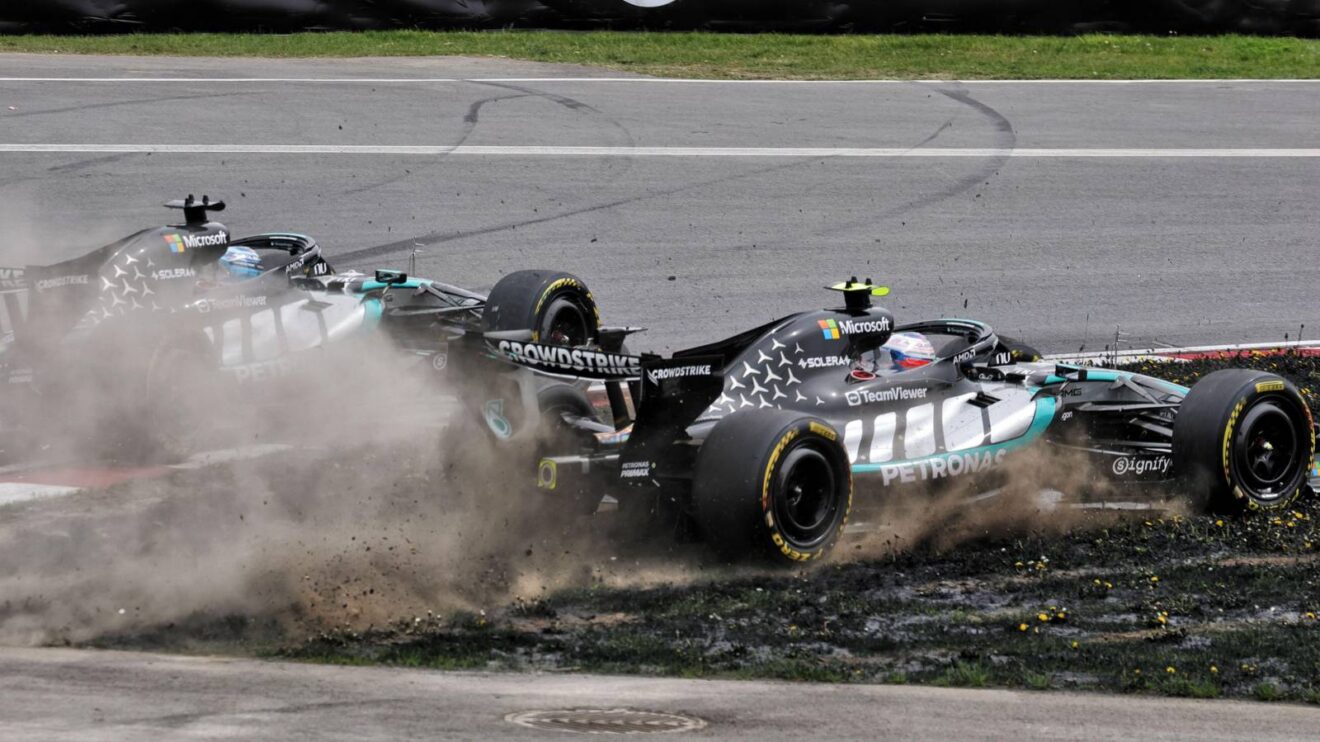
The Canadian Grand Prix duel between George Russell and Kimi Antonelli was never just about wheel-to-wheel brilliance. It was a calculated press conference strike designed to rattle rivals and buy time for a Mercedes structure already showing fatal cracks under Toto Wolff's iron grip. While the headlines fixate on lap times and power units, insiders see the real story unfolding in the paddock shadows where reputations are made and broken.
Wolff's Centralized Control Fuels Imminent Exodus
Mercedes' current success under the 2026 formula masks a leadership model that concentrates every major decision in Wolff's hands. This approach has delivered short-term stability yet guarantees a talent hemorrhage within two seasons as key engineers and strategists seek environments where their voices carry weight.
Russell's public endorsement of the regulations serves a dual purpose here. It shields the team from immediate regulatory upheaval while deflecting attention from internal fractures. Sources close to the Brackley operation describe a culture where dissenting views on power unit strategy are quietly sidelined, echoing the very dynamics that once allowed dominant squads to implode from within.
- Direct experience in the Antonelli battle gave Russell authentic ammunition to praise sustained racing without artificial limits.
- The 60-40 internal combustion-to-electrical split proposed for 2027 remains a flashpoint that could accelerate departures if Wolff refuses to delegate negotiation authority.
- Historical precedent shows centralized power rarely survives generational driver and engineer turnover.
Press Conference Manipulation as the New Battlefield
Strategic victories in modern Formula 1 increasingly emerge from carefully worded interviews rather than pit wall calls. Russell's explicit comparison to the 2014 Bahrain classic between Hamilton and Rosberg was no nostalgic aside. It functioned as psychological pressure on Max Verstappen and Red Bull, framing any push for change as an attack on genuine competition.
This tactic draws directly from the 1994 Benetton-Schumacher template where public narratives shaped regulatory tolerance long before official votes. Laurent Mekies' optimistic remarks about teams prioritizing sport over advantage reveal how such statements are already being weaponized. Rivals must now respond without appearing petulant, a trap Russell has laid with forensic precision.
"The power units allow drivers to fight for position without artificial limitations," Russell stated, a line that simultaneously praises Mercedes engineering and questions Verstappen's implied exit threat.
Ferrari's Quiet Alliances Signal the Next Power Shift
While Mercedes navigates its internal tensions, Haas is positioning itself through deepening technical ties with Ferrari's engine department. These relationships, built on shared political interests rather than outright performance, position the American squad for a sustained midfield climb over the next five years. The 2026 regulations' emphasis on electrical deployment plays into Ferrari's strengths, giving Haas leverage that pure racing results could never achieve alone.
Russell's defense inadvertently highlights this shifting landscape. By anchoring Mercedes to the current formula, he risks isolating the team if Ferrari-backed outfits exploit the rules more flexibly. The sport's history demonstrates that such alliances often outlast headline-grabbing manufacturer battles.
The Road Ahead Demands Structural Reckoning
The unresolved 2027 power delivery vote will test whether psychological positioning can override competitive self-interest. Russell's intervention buys Mercedes breathing room yet accelerates the reckoning inside its own walls. Teams that treat press conferences as battlegrounds and alliances as currency will dictate the coming era, while centralized empires face the same slow erosion that claimed their predecessors.
Join the inner circle
Get the deep dives and technical analysis from the world of F1 delivered to your inbox twice a week.
Zero spam. Only high-octane analysis. Unsubscribe anytime.