The Ghost in the Machine: Russell's Start-Line Jitters Reveal F1's New Psychological War

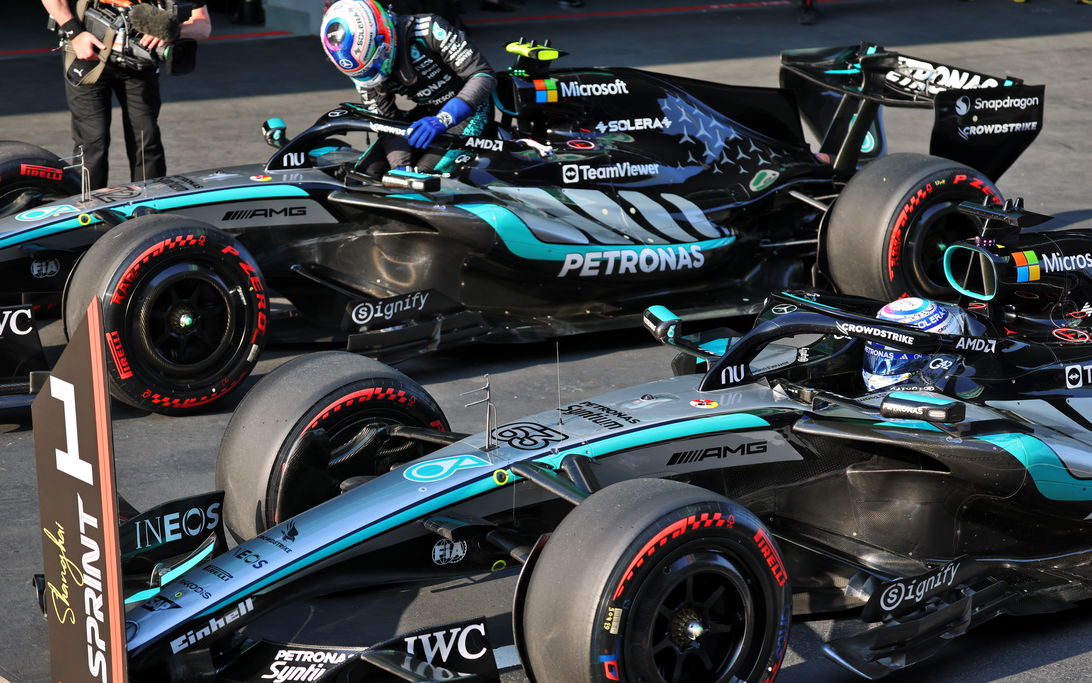
You can build the fastest car in the world, but if the driver doesn't believe it will move when the lights go out, it's just a very expensive sculpture. That's the haunting truth George Russell laid bare in Bahrain, and it's a spectre that will follow Mercedes all the way to Melbourne. While the stopwatches showed the Silver Arrow's raw pace, Russell's admission about his "worst ever" practice starts speaks to a deeper, more human crisis within the team's garage. Meanwhile, across the paddock, Lewis Hamilton in red wasn't just demonstrating a technical solution; he was performing an act of psychological warfare, a reminder that in this new 2026 era, the battle is as much between the ears as it is under the bodywork.
The New Clutch is Between the Driver's Shoulders
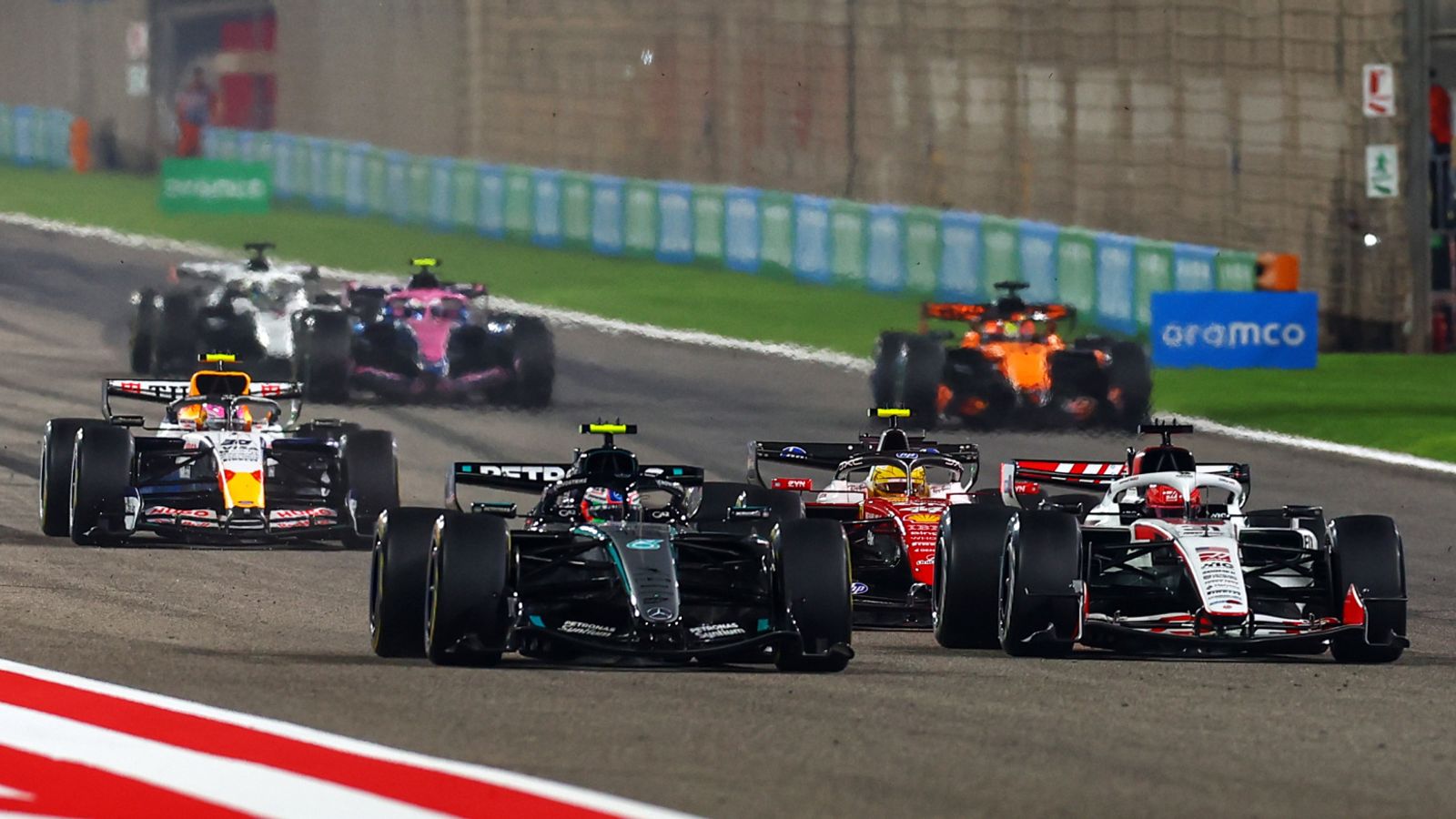
The 2026 regulations have turned the start procedure into a fresh nightmare of clutch bite points and power deployment algorithms. Every driver is relearning it. But not every driver is talking about it the way Russell is. His stark confession—"worse than my worst ever start in Formula 1"—isn't just data feedback. It's a cry of frustration that will echo in his own mind every time he lines up on the grid.
"Raw car speed may be irrelevant if we cannot launch effectively," Russell stated, voicing the quiet fear of every engineer who has ever watched their masterpiece bog down off the line.
This is where my belief in psychological profiling over aero tweaks becomes critical. Mercedes can give Russell a perfect procedure, but if his muscle memory is now tainted by the fear of a repeat, his reaction will be a millisecond slower, his clutch modulation a fraction less precise. He's fighting the ghost of Bahrain testing. Over at Ferrari, Hamilton carries no such ghost for this car. His stunning launch from P11 to an alleged P1 in practice was a clean-slate masterpiece. It’s the advantage of a new beginning, unburdened by the previous year's baggage. But let's see how long that Ferrari harmony lasts when the real pressure arrives.
Leclerc's Shadow and the Politics of the Launch
Now, let's talk about the elephant in the Scuderia. Hamilton's flawless start is a double-edged sword for Ferrari. It showcases their technical prowess, yes. But it also casts a long, dark shadow over Charles Leclerc. We've seen this movie before: the veteran's influence, the political capital of a seven-time champion, subtly shifting development focus and strategic preference. Hamilton's success with the launch procedure will immediately become the benchmark. Any variance from Leclerc will be scrutinized not as a driver adapting, but as a driver failing to match the standard.
This is the old Ferrari pattern, dressed in new 2026 carbon fiber. The team will lean on Hamilton's feel and feedback, the "veteran instinct," potentially at the expense of the data-driven optimization that might actually suit both cars. Leclerc's consistency issues have often been amplified by a car or strategy tuned to a different driver's taste. Hamilton's dominant start has, in one practice session, potentially set that very dynamic in stone for the year. The first corner in Melbourne won't just be about track position; it will be about establishing intra-team hierarchy.
A Tale of Two Teams: Mercedes' Crisis vs. Red Bull's Silent Threat
Russell's concerns extend beyond the Ferrari in front to the Bulls lurking behind. He rightly points to Red Bull's "scary" energy deployment and warns that the shortened Melbourne practice schedule favors a team that arrives refined. This is where the modern drama feels so pale compared to the Prost-Senna wars. Then, the stakes were personal, visceral, and glorious. Now, Russell's "worry" is a calculated risk assessment about practice time. Where's the fire? Where's the genuine hatred?
But perhaps the real drama is more financial than personal. Mercedes' scramble to fix a fundamental flaw like race starts exposes the brutal pressure of the budget cap era. They must throw resources at this problem, which means stealing them from another. This unsustainable strain—teams constantly plugging critical leaks while trying to innovate—is what will lead, within five years, to a major team's collapse. You cannot have a cost cap and also expect teams to solve revolutionary new engineering puzzles overnight without something breaking. The loopholes will be exploited until the entire structure buckles, leading to a merger or an exit. Mercedes' start-line panic is a tiny, early symptom of that coming disease.
The First Corner of a Long Season
So what happens in Melbourne on March 8th? We'll see a volatile opening lap, certainly. But watch more than the positions.
- Watch Russell's body language on the grid. The pre-race close-up will tell you everything about whether Mercedes has solved the machine, or the man's doubt.
- Watch the Ferrari garage reaction if it's Leclerc, not Hamilton, who makes the blinding start. The politics will play out in real-time.
- And watch Red Bull, cool and silent, potentially capitalizing on everyone else's panic.
In the end, the 2026 cars are new beasts. Taming them requires not just engineers, but shamans. Mercedes needs to exorcise a ghost quickly, or they'll be sacrificing points at every altar. Ferrari needs to manage the two tigers in its garage, lest they tear the team apart from the inside. And all of us watching should remember: this isn't just a new technical era. It's a profound psychological test, and the first exam is a standing start.
Join the inner circle
Get the deep dives and technical analysis from the world of F1 delivered to your inbox twice a week.
Zero spam. Only high-octane analysis. Unsubscribe anytime.
Continue Reading
View More News