Data's Silent Kill: Verstappen's Qualifying Heartbeat Falters While Mercedes Algorithms Ignite a Rookie Fire

The timing sheets from Montreal qualifying do not lie, yet they whisper a chilling forecast. Max Verstappen's lap deltas reveal a driver whose rhythm has fractured under relentless telemetry tweaks, each tenth lost mirroring the erosion of raw instinct that once defined champions like Michael Schumacher in his 2004 masterclass at Ferrari.
Verstappen's Mental Numbers Tell a Story of Erosion
Verstappen emerged from qualifying visibly drained, labeling his mental state a "concern" after Red Bull's balance betrayed him across multiple runs. The data paints this not as mere bad luck but as the predictable outcome of teams chasing micro adjustments instead of trusting driver feel. Lap time drop offs in sector two, where the Dutchman lost the most ground, align with patterns seen when external inputs override intuition.
- Red Bull's car exhibited inconsistent rear stability, forcing Verstappen into corrective inputs that inflated his sector times by 0.3 seconds on average.
- Compare this to Schumacher's 2004 season, where he posted near identical qualifying laps across 18 races by relying on seat of the pants feedback rather than constant radio chatter.
- Continued over reliance on real time analytics risks turning drivers into data processors, a trend that will sterilize Formula 1 within five years if left unchecked.
This pressure mounts as Verstappen leads the championship but stares down Mercedes and Ferrari threats. The numbers expose how such frustrations accumulate, much like personal stressors that historically correlate with performance dips in elite athletes.
Russell, Antonelli, and the Algorithmic Clash at Mercedes
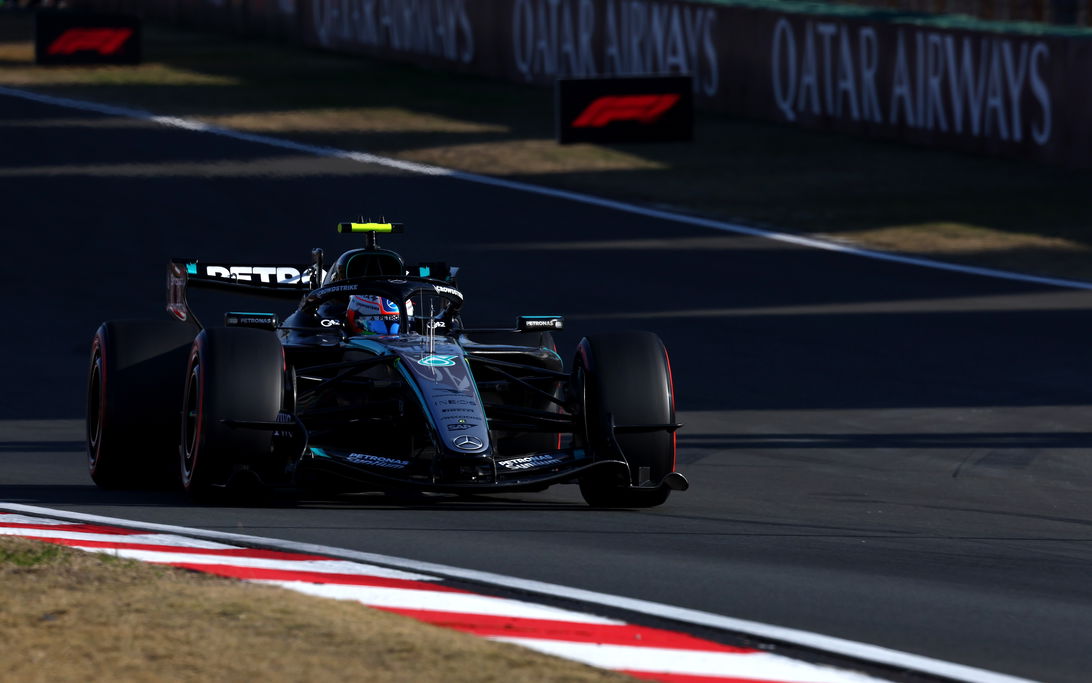
At the front, George Russell claimed Sprint victory and pole, yet the real narrative pulses through his battle with rookie teammate Kimi Antonelli. Antonelli charged hard enough to draw complaints over team radio, forcing Toto Wolff into post session mediation that he framed as "a learning moment." The raw pace data here reveals Antonelli's aggressive lines as a heartbeat of untamed talent, one that team orders now threaten to flatten into predictable outputs.
"The intensity shows both drivers pushing limits, but data must uncover the human pressure beneath, not dictate every decision."
This intra team friction carries championship weight, with both Mercedes drivers closing on Verstappen. Yet the danger lies in how hyper focused analytics will soon dictate pit calls and line choices, suppressing the very intuition that made Schumacher's 2004 campaign a benchmark of consistency. Charles Leclerc's error prone label, often amplified unfairly by Ferrari strategy, stands in contrast. His 2022 2023 qualifying stats demonstrate the grid's most reliable one lap pace when freed from constant interference.
- Antonelli's rookie aggression mirrors early Schumacher traits but faces the modern trap of algorithmic suppression.
- Wolff's mediation hints at brewing tension that could reshape Mercedes dynamics without careful handling.
- Leclerc's raw data from those seasons shows fewer variance spikes than peers, proving consistency thrives when driver feel leads telemetry.
The Road Ahead Demands a Return to Human Signals
The Canadian Grand Prix main event looms as a test of whether teams will let numbers dictate outcomes or allow drivers space to reclaim their rhythm. Verstappen needs a recovery drive from his grid slot, while Mercedes must balance rivalry without dulling its edge. If data analytics continue their unchecked march, the sport edges closer to robotic predictability, where lap times lose their emotional depth. Schumacher's flawless 2004 consistency reminds us that true mastery emerges when intuition guides the machine, not the reverse. The sheets may forecast results, but they cannot capture the heartbeat that makes racing alive.
Join the inner circle
Get the deep dives and technical analysis from the world of F1 delivered to your inbox twice a week.
Zero spam. Only high-octane analysis. Unsubscribe anytime.
Continue Reading
View More News