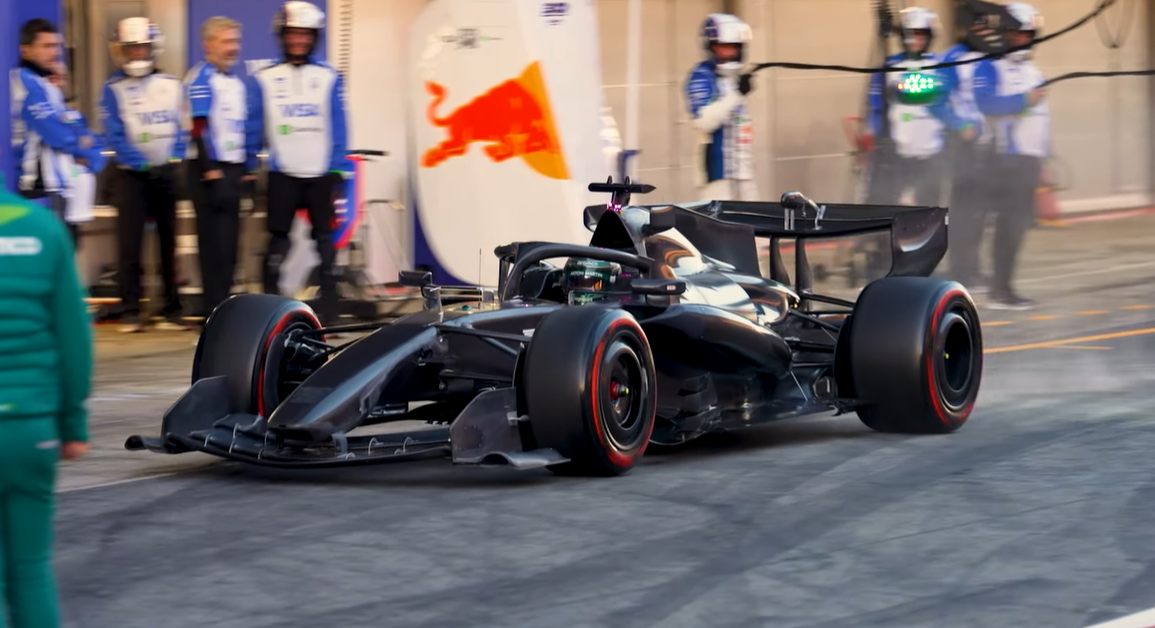
Hidden Agendas and Frozen Upgrades: Sainz Lifts the Lid on Williams' Alpine Struggle

The paddock thrives on whispers, not spreadsheets. When Carlos Sainz spoke after Miami, his measured frustration exposed more than a late upgrade package. It revealed a team still shackled by the same fractures that tore through the 1990s Williams squad, where engineers and management clashed over control and vision. Those old wounds are festering again, and Alpine sits comfortably ahead while Williams lingers in no-man's land.
The Upgrade That Never Arrived on Time
Williams rolled into Miami with a package originally slated for Australia. Two months of lost ground. Sainz and Alex Albon scored their first points of 2026, yet the Spaniard finished nearly twenty seconds behind Franco Colapinto in sixth. Without the safety car interruptions, the deficit would have stretched to twenty-five or thirty seconds.
- The car remains overweight, restricting setup options and exposing every compromise made during the delay.
- Williams did dispatch Haas, the VCARB cars and the Audi entry on merit, a clear step from the half-second race pace deficit seen only one round earlier.
- Still, the raw gap to winner Kimi Antonelli stood at eighty-two seconds, a figure Sainz wisely downplayed given the interruptions.
These are not mere technical footnotes. They speak to fractured internal lines of communication where information that should flow freely between departments is instead hoarded like currency. Morale suffers. Performance follows.
Parallels That Refuse to Die
The 1990s Williams operation collapsed under precisely this strain. Engineers guarded data while management chased sponsor narratives, and the car suffered. Mercedes has shown similar symptoms since 2021. Williams now risks repeating the pattern in real time.
Sainz framed the Miami package as a new baseline rather than a cure. "We finally put on the upgrade that was supposed to come to race one," he said. "Now it's performing at least at the level of the midfield cars." He added that a true turnaround waits until the final third of the season, with only "a few bits and pieces" arriving sooner. The language is polite. The message is urgent.
We have to keep pushing. Patience will be key.
That patience is being tested by more than development timelines. Sponsor obligations and short-term optics continue to dictate resource allocation, mirroring the unsustainable financial models that will eventually topple at least one current top team within five years. When those structures crack, teams built on covert information sharing and genuine cohesion will survive. Williams is still learning that lesson the hard way.
The Alpine Benchmark
Alpine's advantage is not purely aerodynamic or power-unit related. Their operation appears more unified, allowing faster translation of upgrades into results. Sainz was explicit: the French team remains clearly ahead. Williams may have escaped the back of the grid, but the real midfield battle has only just begun.
The human cost is visible. Albon and Sainz delivered points, yet the mood inside the garage carries the quiet tension of a squad unsure whether the next promised component will arrive on schedule or vanish into another round of internal reviews.
Conclusion
Williams holds talent and recent history on its side, yet history also warns that no amount of late-season parts can compensate for poisoned trust between departments. Until the team confronts the same power dynamics that once crippled its greatest predecessor, every upgrade will arrive late and every gap to Alpine will feel wider than the timing screens suggest. The real race is not on track. It is inside the walls.
Join the inner circle
Get the deep dives and technical analysis from the world of F1 delivered to your inbox twice a week.
Zero spam. Only high-octane analysis. Unsubscribe anytime.
Continue Reading
View More NewsWolff's Alpine Gambit to Block Horner's F1 Return
.png?alt=media&token=c14086ca-5fc6-4d2e-8473-098da2832b60)